Get Full Government Meeting Transcripts, Videos, & Alerts Forever!
Get email alerts on the Adult Care Homes topic
No spam. Unsubscribe anytime.
Providers oppose Multnomah County care‑plan signature rule; board postpones rule adoption
Summary
Operators of adult care homes urged the Multnomah County Board to withdraw or revise a temporary rule that requires resident or representative signatures on care plans, arguing it would delay necessary care and create enforcement risk; the board postponed action to August 13 to allow more stakeholder engagement.
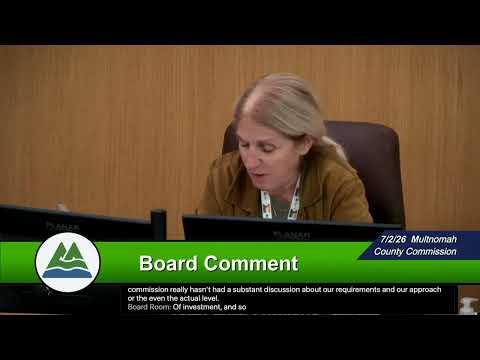
Multnomah County commissioners on July 2 postponed a decision on proposed county rules for adult care homes after extensive public testimony from operators who said a new requirement to obtain resident or representative signatures on care plans would create unsafe and unworkable situations.
The county’s Department of County Human Services presented the rule changes, which remove language on intellectual and developmental disability (IDD) licensing (now centralized at the state level), clarify care‑planning documentation, and update definitions to align with state administrative rules. Rachel Pearl, DCHS director, said the changes respond to state policy shifts and regulatory alignment needs.
Why providers objected: Multiple licensed operators and advocacy groups told the board the signature requirement — which would require a resident or power‑of‑attorney to sign new or updated care plans before care is implemented — could prevent timely clinical care for residents who need immediate attention, are cognitively impaired, or whose representatives are unreachable. ‘‘Please do not create rules that force providers to choose between protecting a vulnerable resident and protecting our license,’’ said Ella Shepherd, a registered nurse and operator.
Legal and operational concerns: Provider representatives, including the Oregon Care Home Council, said the county’s rule record mischaracterized state intent and that Oregon administrative rules do not require executed signatures before implementing a care plan. Several operators asked the board to invalidate or revise the care‑plan signature provision and to withdraw compliance corrections issued solely for missing signatures.
Board response and postponement: Commissioners asked for clarity about exceptions for emergent care, after‑hours decision‑making, and how the county’s exception process would operate in practice. Several commissioners said they want additional targeted engagement with providers and a clearer implementation and exception plan. The board moved to postpone R2 to the August 13 meeting to allow DCHS to reengage stakeholders and to consider bifurcating parts of the rule (for example, removing IDD language that is now state‑level) from the controversial care‑planning changes.
What happens next: DCHS said the current temporary rule can be extended if needed and staff will follow up with commissioners on how to separate uncontroversial changes from the care‑planning language that needs more stakeholder work.
Attribution: Reporting draws on testimony from Ella Shepherd (registered nurse/operator), Simona Bulovan and Anna Petrus (providers), legal summaries from county staff (Jonathan Strawhall) and DCHS director Rachel Pearl during the July 2 meeting.