Get Full Government Meeting Transcripts, Videos, & Alerts Forever!
Get email alerts on the Park Impact Fees topic
No spam. Unsubscribe anytime.
Kenmore hears public testimony on park impact fees; residents urge higher rate while builders urge balance
Summary
At a public hearing on proposed park impact fees, residents urged a higher fee to fund parks projects while development interests supported a 75%-of-maximum rate; council took testimony but did not adopt the ordinance at this meeting.
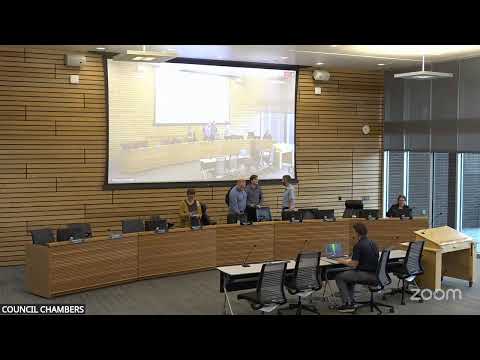
The Kenmore City Council held a public hearing on a proposed park impact fee ordinance (agenda item: Ordinance 260643) and received on-site and virtual testimony about the proposed approach. Assistant City Manager and Community Development Director Debbie Bent explained that the fee, planned to take effect Jan. 1, would be calculated based on dwelling‑unit square footage and that council had previously given direction to set the rate at 75% of the calculated maximum.
Tracy Banashinski, speaking as a resident and planning commission member (but not on behalf of the commission), urged the council to adopt a higher rate and directed the council's attention to a consultant's finding that the park impact fee should be at least 70% and preferably 90% of the growth share. Banashinski noted that developers historically have covered about 10% of parks capital projects in Kenmore and argued that undercollecting impact fees shifts costs to long‑standing homeowners via levies.
Ryan MacKinstur, King County government affairs manager for the Master Builders Association of King & Snohomish Counties, spoke virtually for builders and developers, supporting the square‑footage approach and the council's June direction to set the rate at 75% of the maximum. MacKinstur emphasized that additional costs to new housing affect end‑user affordability and urged caution about how fees influence housing prices.
No final ordinance vote was recorded in the meeting transcript; the hearing was closed and council discussion on next steps will follow in a subsequent meeting. Council and staff noted the city's six‑year CIP and statutory limits (impact fees can only fund growth share of capital projects) as context for the rate decision.
Next steps: council to consider public input and consultant recommendations before returning with a final ordinance vote.