Get Full Government Meeting Transcripts, Videos, & Alerts Forever!
Get email alerts on the Industrial Emissions topic
No spam. Unsubscribe anytime.
Residents demand testing after months of odors; company says odor-suppression system will be installed
Summary
Residents told the Whitfield County Board of Commissioners they have suffered nausea, eye irritation and chest pains from intermittent odors near the Ascentia/Essentia Dalton facility and asked the county to require air-quality testing. Michael Waters, the facility's engineering director, said the plant has identified a drying-stack source and will install an industrial odor-injection system and has invested in mitigation.
Michael Waters, the director of engineering for Ascension North America's Dalton operations, told the Whitfield County Board of Commissioners on June 13 that the company identified the source of intermittent, "burnt protein" odors at its processing plant and will install an odor-mitigation system the following day.
"We found a company that deals with different industrial odors and things like that, and we've released capital to mitigate that thing," Waters said, describing an injected odor-control chemical the company expects will "make a huge, huge difference." He said the initial capital outlay was roughly $70,000 and total project spending about $180,000.
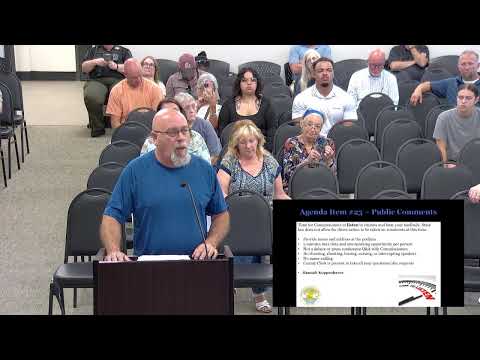
Several nearby residents told the board they do not consider an injected fragrance or masking agent an adequate response. "That's not fixing the problem," James Worth said in public comment. "We're breathing it. We deserve more than that. I have chest pains in the wintertime when this stuff settles in on us." Worth asked the county to commission scientific air-quality sampling and to identify the responsible corporate contact for follow-up.
Chair (speaker 3) and county staff described coordination with Dalton Utilities, which presented slides noting intermittent sewer odor episodes and work to treat hydrogen-sulfide releases at the wastewater system. The chair and staff said the county, the utility and the company are addressing the issue from multiple angles: company stack controls and a utility-side chemical treatment for sewer odors.
Waters told commissioners the plant has deployed daily monitoring, weather and wind tracking and that USDA inspection and on-site USDA personnel oversee food-safety aspects of the facility. He acknowledged that some complaints appeared intermittent and tied to wind conditions. "Nothing is 100% but we think this will definitely make a huge, huge difference," he said of the odor system.
Residents and public commenters pressed several unresolved questions: what chemical(s) will be injected into the exhaust, what compounds are present in air emissions today, and whether the county or a third party will collect air samples to document constituents and concentrations. Multiple speakers reported physical symptoms they attributed to the odor, including nausea, eye irritation and chest pain.
What happened next: commissioners did not vote on regulatory measures at the meeting. The company said it planned to install the mitigation system immediately and to continue working with Dalton Utilities and the Joint Development Authority; residents asked the board and county attorney for a public record of any tests and legal analysis of company accountability.
Why it matters: residents said the intermittent odors have persisted for months and that local public-health impacts warrant independent sampling or stronger controls than a masking injection. The county is balancing an employer's mitigation plan with requests from neighbors for transparency and scientific verification.
Provenance: presentation and Q&A by Michael Waters (speaker 2) and Dalton Utilities slides (SEG 599–836); public comment by James Worth (speaker 8) and related neighbor testimony (SEG 1260–1410).