Get Full Government Meeting Transcripts, Videos, & Alerts Forever!
Get email alerts on the Public Safety topic
No spam. Unsubscribe anytime.
Botanist demonstrates how to identify and avoid poison ivy and yellow parsnip
Summary
John Pearson, a botanist with the Iowa Department of Natural Resources, demonstrated how to recognize poison ivy and yellow (wild) parsnip, described the skin-irritating compounds they carry and advised washing exposed skin with soap and water within about an hour after contact.
John Pearson, a botanist with the Iowa Department of Natural Resources, demonstrated how to identify two plants that can cause skin irritation: poison ivy and yellow (wild) parsnip.
Pearson said the same species can appear in different forms: “This is growing as a big shrub form,” he said of poison ivy, noting it also often appears as a creeping vine. He described one identifying feature: poison ivy has three leaflets with the lateral leaflets attached by very short stems and the terminal leaflet attached by a noticeably longer stem. He told listeners the shiny upper surface many people notice is caused by the plant’s irritating oil, and that the plant currently has small green berries that later turn white and are poisonous if touched.
Why it matters: both plants pose a public-health nuisance for people working or recreating outdoors. Pearson pointed out mite galls on the poison ivy leaves—red bumps caused by mites that disfigure leaves but “don’t kill the plant.”
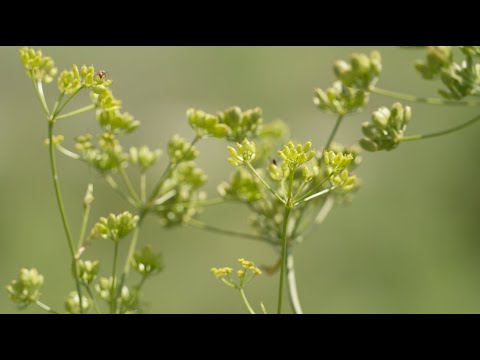
Turning to yellow (wild) parsnip, Pearson said the plant is abundant along a stretch of roadside ditch: “the entire road ditch going down for at least a quarter mile. It’s just absolutely full of this plant.” He described common traits: tall stalks (about 4–5 feet, sometimes up to 6), dull yellow flowers, compound leaves with about a dozen leaflets, and a grooved stem with alternating ridges and valleys.
Pearson explained the health risk from yellow parsnip arises from a chemical family called furocoumarins. “Yellow parsnip has a compound in it called furocoumarin,” he said, and the compound becomes more irritating in bright sunlight as it breaks down into smaller, more irritating components.
Practical guidance: Pearson advised people who come into contact with either plant to wash exposed skin with soap and water “as soon as possible, preferably within 1 hour,” to minimize or prevent irritation depending on an individual’s sensitivity.
The presentation was descriptive and informational; no motions or formal actions were recorded during the segment.