Get Full Government Meeting Transcripts, Videos, & Alerts Forever!
Get email alerts on the Mosquito Spraying topic
No spam. Unsubscribe anytime.
Clemson sustainability committee to develop recommendation on mosquito spraying after science review
Summary
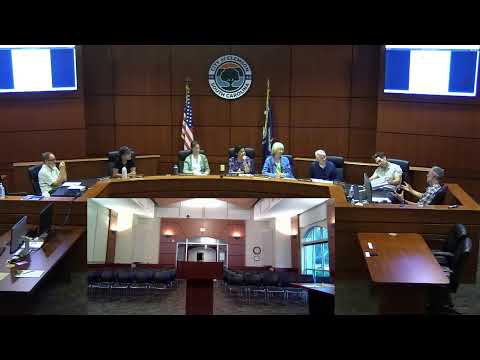
At its July 8 meeting the Clemson Sustainability Committee agreed to develop a presentation and recommendation to city council on mosquito spraying after a member’s review raised environmental concerns about permethrin and questioned the routine use of truck-based spraying.
The Clemson Sustainability Committee said July 8 it will prepare a presentation for the committee and a recommendation to the Clemson City Council that explores alternatives to routine mosquito spraying.
Committee members heard a research briefing from a member who reviewed the chemical used by the city’s contractor (marketed as BioMIST; active ingredient permethrin) and raised concerns about environmental effects and limited local disease risk. "Permethrin is listed as highly toxic to bees," the committee member said, citing a California Extension Service toxicity table; the presenter added that permethrin is also toxic to fish and has a medium to long-term residual effect on plants.
Why it matters: The committee’s discussion balanced public-health goals against environmental risks and local efficacy. Members noted that West Nile and eastern equine encephalitis have been rare in the region and that the Centers for Disease Control monitors outbreaks; the committee also discussed whether routine truck-based adulticide spraying meaningfully reduces disease risk when it does not interrupt larval breeding.
What the committee asked for: Members requested that staff and volunteers assemble data on the city’s total mosquito-control costs (including staff time, vehicle costs and overtime pay) and obtain the city’s spraying map and schedule to clarify where and how routinely trucks apply product. The group discussed alternatives such as larvicidal 'dunks,' distribution of topical repellents or wristbands for children, targeted spraying of high-risk wooded areas, and stronger public education on source reduction (removing standing water).
Plans and next steps: The committee agreed to see a draft presentation in August and to make an action item to take a motion to city council in September asking the council to consider alternatives to routine district-wide spraying. One committee member volunteered to draft the motion and circulate it to staff for the August meeting.
The committee did not make a formal policy change at the meeting; it set the work plan and requested cost and coverage details so the recommendation to council can state the expected budgetary and operational impacts.