Get Full Government Meeting Transcripts, Videos, & Alerts Forever!
Get email alerts on the Nuclear Energy topic
No spam. Unsubscribe anytime.
Industrial Authority urges Lewis County to begin public education on 'nuclear‑ready' certification under Senate Bill 57
Summary
An Industrial Authority representative told Lewis County Fiscal Court the county should proceed with public education and engagement under Senate Bill 57’s nuclear‑ready certification; the presenter emphasized the resolution would not commit the county to a project or specific site and proposed an August community meeting, but no formal vote was recorded in the transcript.
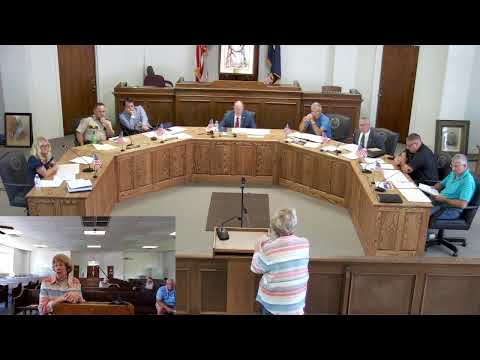
An Industrial Authority representative presented a recommendation to the Lewis County Fiscal Court to begin community education and engagement under Senate Bill 57, which the presenter described as a framework for localities to become "nuclear‑ready." The presenter described the proposal as an education and transparency process, not a commitment to any specific project or site.
"The resolution today does not lock you into a project, doesn't lock you into the certification," the presenter said, adding the purpose is to encourage public meetings, public notices and a community‑driven assessment of infrastructure, workforce and site suitability. He emphasized that federal safety and regulation remain the responsibility of the Nuclear Regulatory Commission and that the state certification sets a framework for early, informed local discussion.
The presenter outlined partnerships with SOAR (Shaping Our Appalachian Region), Buffalo Trace and state officials to deliver education and community engagement, described workforce training opportunities tied to nuclear work and explained the certification process requires public education and transparency before projects advance. He said a tentative first community engagement meeting was planned for Thursday, August 6, contingent on scheduling and approval.
Court members asked for time to review the resolution language. The judge said he wanted more detail and the court discussed advertising timelines for public meetings; in the transcript, the presenter encouraged the court to adopt the resolution to formally start the education process, but no motion or roll‑call vote appears in the provided record.
The presenter stressed the initiative is intended to give residents an early voice about whether they want certain kinds of energy projects and to identify whether local infrastructure (roads, electric, water, natural gas) can support potential industry needs. He said communities that undertake the certification will make their own decisions about which sites — if any — are acceptable.