Get Full Government Meeting Transcripts, Videos, & Alerts Forever!
Get email alerts on the Community Engagement topic
No spam. Unsubscribe anytime.
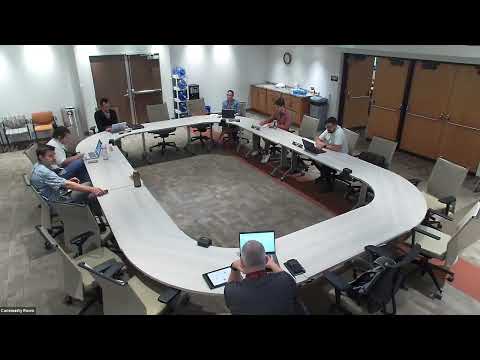
Littleton advisory board reviews draft pulse survey aimed at residents 18–36
Summary
The Littleton Next Generation Advisory Board reviewed a draft quarterly pulse survey intended to gather feedback from residents aged 18–36 on topics such as e‑bikes, neighborhood identity and childcare. The board asked for line‑level feedback by July 24 and discussed sample size, anonymity and routing logic.
The Littleton Next Generation Advisory Board reviewed a draft "pulse" survey designed to gather regular feedback from residents aged 18–36 and asked the presenter to circulate a line‑level draft and collect feedback by July 24.
The presenter said the survey will use a screener to confirm Littleton residency and basic demographics and will remain anonymous unless respondents opt in to follow‑up contact. "My goal would be to get at least a 100 responses," the presenter said, adding that the team would treat early returns as directional and aim for higher totals over time to allow more rigorous analysis.
Board members and staff discussed survey design details including limiting the instrument to four modules and no more than three to four questions per module to avoid respondent fatigue. The proposed modules include e‑bikes and youth transportation, neighborhood mapping (with optional visual concepts), third‑space activation and an attainable/childcare access section; one member suggested using the term "attainable" rather than "affordable" to avoid technical housing metrics being implied.
On methodology, staff recommended linking to the city’s address‑wizard tool for digital screening and using existing LDDA reports for validation. The presenter said the survey would be primarily anonymous but would capture an email address only from respondents who opt in to future focus groups or follow‑up.
Board members raised statistical concerns and agreed early results would be directional: the presenter recommended treating 100 responses as an initial pulse and noted that 1,000 responses over 12 months would enable more robust analysis. A staff member added that the city conducts scientifically valid representative surveys less frequently and that this pulse survey is intended to complement, not replace, those efforts.
Next steps: the presenter will send a draft for line‑level feedback and program the survey to go live after the board’s comments; members agreed to provide feedback by July 24 so the board can incorporate the results into future recommendations to city council.