Get Full Government Meeting Transcripts, Videos, & Alerts Forever!
Get email alerts on the School Reconfiguration topic
No spam. Unsubscribe anytime.
Survey and feasibility study point to parent support and bus-time savings for possible K–5 elementary reconfiguration
Summary
Consultant John Puckett presented a feasibility study and spring survey showing mixed but substantial parental support — roughly 40% “very likely” and another 19% “somewhat likely” — for reconfiguring elementary schools to K–5, and identified potential bus-time savings and staffing implications.
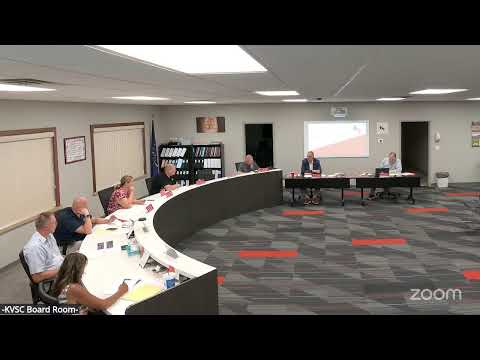
John Puckett presented survey results and a feasibility analysis to the Kankakee Valley School Corp. board during a July 13 work session, saying the district has seen a modest enrollment decline since 2018 and uneven utilization across elementary buildings.
Puckett summarized the survey sample and major findings, saying the district had about 162 parent responses along with 55 teachers, 50 staff members and 40 community members. “If you were to reconfigure and have 3 K–5 elementary schools, it would save transportation costs,” Puckett said, describing an example in which eliminating transfer runs could reduce average daily bus time from roughly 80 minutes to about 50 minutes per day for affected students.
The consultant highlighted operational implications: DeMotte was identified as overcrowded while other elementaries have significant unused classroom space. He reported a current general-education teacher-to-student ratio of just over 19:1 (compared with a statewide average of about 21:1) and said the district employs about 77.5 paraprofessionals for roughly 1,300 elementary students — a staffing level that could create budgetary pressure but would also offer staffing-flexibility if buildings were reorganized.
Puckett said the district’s literacy and curriculum consistency are strengths — with test results “always above the state average and in the nineties” — and that academic performance did not show a clear drop tied to the current transitions between grade configurations. He cautioned that social-emotional and relational impacts are harder to quantify from the available data.
On stakeholder sentiment, Puckett reported that a plurality of parents said they would be “very likely” (about 40% of respondents) to support a reconfiguration; another 19% said they were somewhat likely, while about 21% were “very unlikely.” He noted parents whose children spend more than 40 minutes on the bus were less satisfied with the current grade-level organization and more likely to favor change.
Board members asked clarifying questions about possible facilities work; Puckett said some structural changes (for example, restroom modifications and relocating furniture and equipment at the intermediate school) would likely be required to accommodate younger students. He also warned that reassigning staff could include changes to some positions and potentially opportunities to reduce staff for budgetary savings.
S1 told the board the presentation would be “brought back” for further consideration: “I’ll get with our president and determine how you would like to proceed with this in the future,” S1 said, signaling that the board has not taken action and will consider next steps after internal review.
The work session presentation drew on a spring stakeholder survey and a facilities review; the board did not vote on any reconfiguration measures at the July 13 session.