Get Full Government Meeting Transcripts, Videos, & Alerts Forever!
Get email alerts on the Special Education Plan topic
No spam. Unsubscribe anytime.
Upper Darby committee reviews final three-year special education plan, moves it to voting meeting
Summary
The Education and Pupil Services Committee reviewed the district—s final three-year special education plan, heard staff outline priorities on inclusion, assessment and family engagement, and agreed by consensus to forward the plan for board action at the special voting meeting.
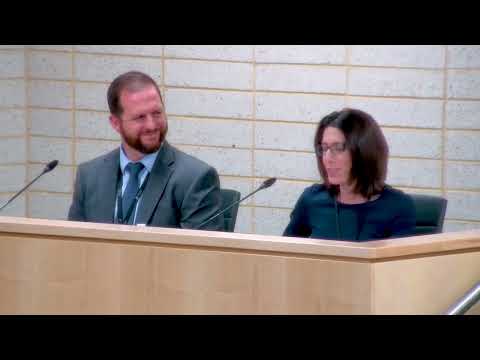
The Education and Pupil Services Committee of the Upper Darby School District heard a final presentation of the district—s three-year special education plan and agreed to move the proposal to the upcoming special voting meeting for board action.
Mister Marshallak, the district staff member who led the presentation, said the plan has been on public review since March 25 and is scheduled for submission to the Pennsylvania Department of Education by May 1. "This plan has been on public review since March 25," he said.
The presentation summarized the plan—s legal and operational foundations, citing Pennsylvania Department of Education guidance and Pennsylvania Code Chapter 14 as the governing requirements. Jen Jones, one of the district—s special education supervisors, told the committee that the plan draws on district special education data, cyclical monitoring results and staff training needs. "The special education plan is not just a formality," Jones said; it is meant to be a structured process to review and improve services.
Dr. Matt Alloway, another special education supervisor, outlined core program elements, including the district—s identification method for specific learning disabilities (a discrepancy model), monitoring for significant disproportionality in identification and placement, and the district—s emphasis on educating students in the least restrictive environment. "This means that we are committed to educating students with disabilities alongside their non disabled peers to the greatest extent appropriate," Dr. Alloway said.
Laura Jenkins highlighted work on indicator 3 (assessment and participation) and indicator 5 (educational environments), saying the district will strengthen instruction through evidence-based strategies, better align IEP goals with grade-level standards, and provide professional development on inclusive practices. Jenkins also noted staff will use technical-assistance resources referenced in the presentation (PATIN) to support case reviews.
Will Moore reviewed improvement strategies for indicator 8 (school-facilitated parent involvement), indicator 11 (timely initial evaluations) and indicator 13 (secondary transition planning). Moore said earlier cyclical monitoring found low parent-survey participation, and the district plans a multilayered outreach approach led by building principals and case managers and at least five parent-focused special-education events per year to boost engagement.
During the committee—s question-and-answer period, a member asked whether classrooms are at capacity. Marshallak said the district currently has the space to meet students— needs but monitors enrollment and program growth across buildings and may relocate programs as needed; he also noted Chapter 14 includes minimum square-foot guidelines for IEP classroom space. A parent who identified themself as an IEP parent asked what outreach to expect; Marshallak recommended families look for communications from their child—s case manager or building principal and said the district will front-load guidance so parents recognize state survey materials when they arrive.
On the issue of students placed outside district schools, Marshallak explained most such placements in learning-support categories are tied to disciplinary removals (expulsion or removal) rather than an inability to provide learning-support services in-district; the district—s data for such placements are captured as of December 1 each year.
At the meeting—s close, a staff member asked whether the committee agreed to move the special education plan to the special voting meeting; multiple participants replied in the affirmative and the chair adjourned the session. The plan will now be slated for the board—s special voting meeting for formal action.