Get Full Government Meeting Transcripts, Videos, & Alerts Forever!
Get email alerts on the Coastal Resilience topic
No spam. Unsubscribe anytime.
East Hampton presents 60% designs for Montauk living‑shoreline projects funded by NFWF grant
Summary
Town staff and D&B Engineers presented 60% designs for living‑shoreline projects at Lake Montauk and Fort Pond, funded by a $350,000 National Fish and Wildlife Foundation Coastal Resilience grant; plans include oyster‑bag sills, bioswales, invasive phragmites removal and a maintenance approach tied to permitting.
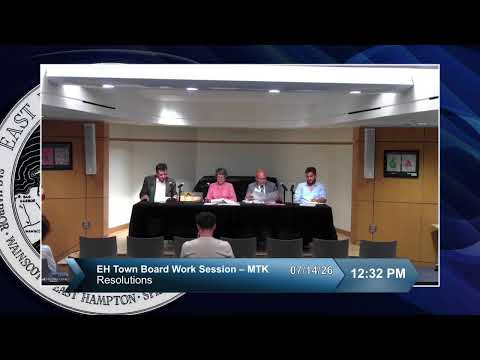
Melissa McCarron, principal environmental analyst in the town’s natural resources department, and Tom Schafer of D&B Engineers and Architects presented 60% engineering and design plans for two Montauk living‑shoreline projects on Tuesday.
McCarron said the town received a $350,000 grant from the National Fish and Wildlife Foundation’s Coastal Resilience Fund to complete site assessments and designs at two priority locations: Lake Montauk (near Stepping Stones Pond) and Fort Pond. The designs aim to increase shoreline resiliency, improve water quality by capturing and treating first‑flush runoff, and enhance habitat by removing invasive phragmites and replacing them with native plantings.
Tom Schafer described site‑specific measures: at Lake Montauk the plan centers on protecting an existing low marsh and installing an oyster‑bag sill at the shoreline to reduce undercutting and provide water‑quality filtration; upland work would add bioswales and define controlled access points with split‑rail fencing and permeable surfacing to prevent vehicle damage. At Fort Pond the team proposes catch basins, a bioswale and interlocking riprap/stabilization along a stretch of roadway where erosion currently reaches the pavement.
Board members asked technical questions about whether removing dense phragmites could increase short‑term erosion, how to maintain newly planted native marsh cover, and how the proposed designs would mesh with other planned road‑raising projects. Schafer said the plan anticipates permit conditions and maintenance requirements: “If we got into this one going out to bid, I would have to request a maintenance, five‑year maintenance plan,” and the design includes root barriers and regrading where necessary to reduce reinvasion.
McCarron said the team had a pre‑application meeting with DEC and received generally positive feedback; DEC representatives were supportive of phragmites removal where the biological assessment showed it would improve habitat diversity. The design team intends to submit permit applications next month and aims to complete permitting and final plans by the end of the year to meet a construction‑grant deadline in February 2027.
Board members signaled support but emphasized robust maintenance commitments and coordination with adjacent projects (for example, the 2nd House Road raising project) and stakeholder groups such as Baymen and marine patrol. McCarron said the town will prioritize one site for initial grant applications and phase implementation to match available construction funding.
Ending: Staff and design consultants will finalize 90% plans and submit permit applications; the town will seek implementation funding and return to the board with permitting updates.