Get Full Government Meeting Transcripts, Videos, & Alerts Forever!
Get email alerts on the Lead Service Line Replacement topic
No spam. Unsubscribe anytime.
Wausau water commission amends financing language in draft lead service‑line ordinance and sends it back to council
Summary
The Wausau Water Works Commission voted to restore two financing paragraphs and remove a prescriptive paragraph in section 9 of a long‑running draft ordinance on mandatory lead service line replacement, directing staff to return the revised draft to city council with additional public outreach.
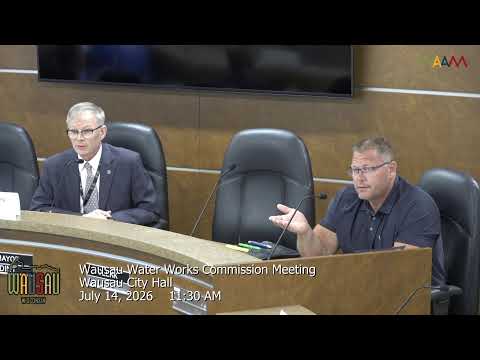
The Wausau Water Works Commission on July 14 voted to amend the financing section of a draft ordinance that would govern mandatory replacement of private lead service lines and directed staff to return the revised draft to the Wausau City Council for further consideration and public outreach.
The commission moved to retain paragraphs 2 and 3 of section 9 (financial assistance and program‑establishment language) and remove paragraph 1, which had been added previously by the council and which commissioners described as unmanageable. The motion was seconded, carried by voice vote, and the commission’s recommendation will go back to council—likely for a September meeting—so officials can decide how, and to what extent, the city will subsidize private‑side replacements.
Why it matters: staff said federal and state principal‑forgiveness dollars that previously covered a large share of private replacements are declining, creating uncertainty for continued high participation rates. Commissioners and staff framed the ordinance as a tool to preserve access to funding (including potential CDBG or other grants) and to provide financing options such as city loans or assessments if grant funding is not sufficient.
Staff told the commission the utility cannot use water‑rate revenue to pay for private‑side work unless the Public Service Commission (PSC) authorizes use of revenue rates (the PSC may allow up to 50% under certain circumstances). The commission was also warned that current lead and copper rules and related regulatory timelines mean the utility must remove lead from the distribution system by roughly 2037–2038 to avoid noncompliance; consequences could range from fines to restrictions on expanding service.
Commission discussion focused on financing choices and fairness. One commissioner said homeowners should ultimately be responsible for replacement costs but supported making funds available or offering city‑administered loans or assessments to ease the burden; others favored preserving flexible ordinance language to allow grants, partial subsidies, or assessment‑style repayment plans. Staff reminded the commission that prior rounds of outreach produced mixed public comment, with some residents opposing mandatory private replacements because of potential cost.
The commission's motion specifically restored two previously struck paragraphs that leave the city discretion to establish a program and provide financial assistance (grants or loans) while removing the council’s prescriptive paragraph. The commission chair said the amendment will facilitate further public outreach and allow the council to make the final funding determination.
Next steps: the commission will forward the amended draft to the City Council for its consideration, with additional outreach planned before the council’s September meeting. If the council adopts a mandate or a funding decision, staff said implementation details—who pays, repayment terms, and use of grant versus city funds—will follow and may require PSC review depending on revenue usage.