Get Full Government Meeting Transcripts, Videos, & Alerts Forever!
Get email alerts on the Infrastructure Project topic
No spam. Unsubscribe anytime.
Sean outlines phased plan for new Effingham apparatus building; committee to decide next Tuesday
Summary
Consultant Sean presented a four‑phase plan for a new apparatus building and for renovating the town's existing fire/police space, outlining survey, soils testing, building options and budget estimates; the Effingham building committee agreed to take a decision at its next meeting.
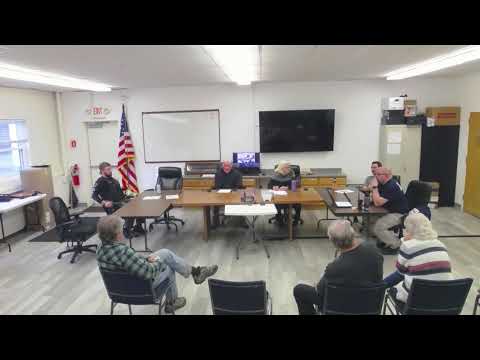
At a meeting of the Effingham building committee, consultant Sean presented a four‑phase plan aimed at delivering a new apparatus building and renovations to the existing fire/police facility, and committee members agreed to finalize a decision at the next meeting.
Sean told the committee that Phase 1 will focus on site survey work and data collection to produce an accurate existing‑conditions plan, and that test pits and soils data are required to design drainage and septic systems. “Small money that could prevent a big mess,” he said, urging the group to get a legal check on deed language before proceeding. He also warned that the existing septic is a 600‑gallon‑per‑day system served by a force main, which may not be reusable depending on grade and routing constraints.
The presentation laid out a multi‑phase approach: Phase 1 for survey and test pits; Phase 2 to develop conceptual building and site plans; Phase 3 to refine site layout and drainage; and Phase 4 to prepare presentation materials and cost estimates for voters. Sean said the goal is to present a concept plan and budget at the 2027 annual town meeting so voters have a clear package to consider.
Why it matters: the committee is considering whether to fund a significant capital project through a bond and how to sequence work so the police department can relocate quickly. Committee members emphasized the importance of clear cost estimates and a voter‑facing presentation: one member said voters need to “see what they're looking at” before a bond vote.
On building options, Sean reviewed pre‑engineered building vendors (including Lester and Morton) and tradeoffs between wood‑framed pre‑engineered shells and steel or masonry construction. He warned that some proprietary buildings are sold through dealers, which can complicate getting three competing quotes, and recommended either seeking general‑contractor bids that would manage subcontracts or obtaining comparative quotes from multiple dealers and steel builders such as Seacoast to verify pricing.
On cost and contingency, Sean illustrated a budgeting approach that builds in a cushion: “If the budget is $1,000,000, tell voters it might be $1,000,000” to allow room for overruns and recommended a roughly 10% buffer. The group discussed recent vendor conversations: a Lester quote appeared in the materials (noted as approximately $160,000 for a shell in the paperwork) while rough per‑square‑foot pricing from others ranged in preliminary conversations from approximately $175–$225 per square foot depending on scope; several participants cautioned that some quotes exclude site work and radiant‑slab heating.
Sean also walked through technical recommendations to reduce long‑term maintenance costs: durable lower wall finishes, insulation and weatherproofing, radiant heat zoning, exhaust systems to remove vehicle gases, and provision for adequate electrical capacity. “Keep the rodents out and keep the water out,” he said, summarizing priorities for durability.
Legal and procedural matters were flagged as prerequisites: the committee asked town staff to resolve a deed issue that had a reversionary clause in a quitclaim deed; Sean and the chair said the town's attorney had been asked to review and the committee expects an answer within days. The group agreed that legal clarity is required before committing further funds or putting items to voters.
Next steps: committee members asked staff and Sean to assemble clearer numbers and answers to the deed and septic questions for the committee's next meeting. The chair said the group should make a decision at the next meeting (next Tuesday) so project timelines can meet bond and budget deadlines. The chair then called for a motion to adjourn, which passed unanimously.
The committee did not take a funding vote at this meeting; the project remains in the planning and vetting stage pending legal clarification, refined cost estimates and the committee's decision at its next scheduled meeting.