Get Full Government Meeting Transcripts, Videos, & Alerts Forever!
Get email alerts on the Housing Adus topic
No spam. Unsubscribe anytime.
County staff lays out deed-restriction paperwork to limit ADU conversions
Summary
At the Jan. 14 meeting, county staff described deed-restriction paperwork for accessory dwelling units (ADUs) designed to require owner occupancy, bind the restriction to the land, and provide an enforcement path if units are converted into multiple rentals; staff said legal has reviewed the paperwork and no vote was taken.
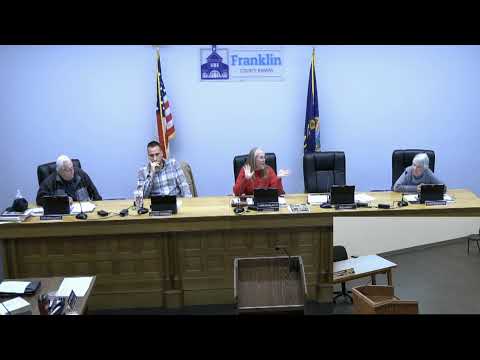
County staff presented proposed deed-restriction paperwork for accessory dwelling units (ADUs) at the Franklin County Board of County Commissioners meeting on Jan. 14, 2026. The staff member said the paperwork is intended to ensure that when a secondary dwelling is constructed the property owner will live on-site and to prevent conversions that would effectively create multiple rental units on a single parcel.
The staff member described the document as a recorded restriction that "goes with the land if they were to sell it" and said it would be used as an enforcement tool to require deconstruction of an ADU or conversion back to an accessory structure if an owner did not follow the regulation. "So, like, an institutional investor couldn't come in and make 2 apartments or houses out of this property," the staff member said, characterizing the policy goal as preserving owner-occupied, family-oriented ADUs.
Staff told the board the paperwork has been reviewed by the county's legal counsel and that applicants would sign the document prior to receiving a certificate of occupancy. The presenter said the rule is not intended to stop family use of ADUs but to limit commercial conversion and absentee ownership that would create multiple unrelated rental units on one lot.
No formal motion or vote on adopting the recorded-deed requirement was taken at the meeting; staff brought the document for the board's information and said it would be used as part of the regulatory process going forward. The board did not direct additional changes during the discussion; staff characterized this item as a policy implementation step following prior regulatory action.