Development Services director outlines permit volumes, Willdan contract and code priorities
Summary
Development Services Director Fuller told the commission the department handles roughly 71 development orders and about 176 permits per month and uses a demand‑based supplemental contract with Willdan for inspections and building-official needs; commissioners questioned the contract scope and discussed balancing contract use against hiring a chief building official.
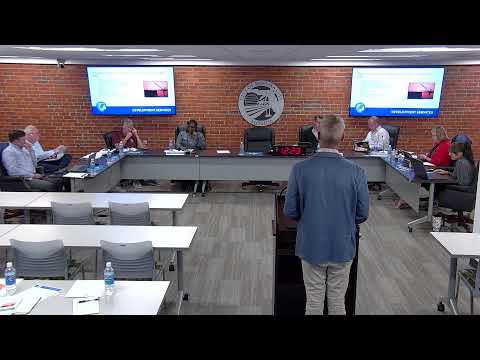
Development Services Director Fuller presented an overview of his department’s four divisions — planning and zoning, building services, code compliance and floodplain/disaster recovery — and described staffing and workload during the July 9 workshop.
Fuller said the department has roughly 20 employees across those divisions and that the average monthly issuance is about 71 development orders, with building services issuing roughly 176 permits per month and conducting about 450 inspections per month. He told commissioners the department has reduced public complaints about review timeliness and pointed to improved customer service since implementing Cloud Permit, though he acknowledged the software is not perfect and said the department would postpone rolling out a replacement if budget constraints require delay.
On building services, Fuller described a supplemental contract with Willdan that provides inspectors and chief‑building‑official services on a demand basis; he explained the contract is billed per permit/inspection hour and that budgeting for the contract has been conservative (staff cited a budgeted upper bound near $400,000–$500,000 in higher-demand years). He said bringing full building services in-house was the long-term goal, but hiring a certified chief building official at market rates (Fuller cited roughly $100,000 in targeted salary) has been challenging because private-sector pay can be higher.
Fuller also described code‑compliance trends since Hurricane Michael, noting that property abatement is increasingly handled by property owners rather than the city, which could lower abatement line items next year. On floodplain management, Fuller highlighted ongoing work on FIRMs and the community rating system that can lower flood insurance premiums for residents.
Commissioners pressed Fuller for the budgetary effect of any contract savings on permit fees and for clarity about which costs are offset by permit revenue versus general-fund subsidy. Fuller said building services cost centers are typically funded by permit revenue but warned there are timing lags for nuisance assessments and abatement recoveries.
Fuller asked commissioners to preserve staff training and technical expertise as a priority. Commissioners responded by urging that training be protected while other discretionary items be considered for cuts. Fuller said he would return with more detail on the Willdan contract usage and the department’s revenue/expense split.
AI generated
The text on this page is AI generated. Summaries, highlights, analysis, and video transcripts are all produced from the original source material.
AI can make mistakes, so if you spot one, and we will fix it for everyone.
Note: the source content is unaltered by us. Any content source we link to, be it a video, an audio recording, or a document, is presented exactly as its publisher released it. That publisher is usually a government body, sometimes an individual official or another organisation.