Get Full Government Meeting Transcripts, Videos, & Alerts Forever!
Get email alerts on the Watershed topic
No spam. Unsubscribe anytime.
Engineer outlines watershed plan for Binder Lake; DNR listing could unlock 60/40 grants
Summary
Barr Engineering presented a conceptual plan to reduce sediment and nutrient loads in Bender (Binder) Lake, including a possible detention basin near Pioneer Trail School and an education component; presenter said DNR’s impaired listing enables grant funding subject to a watershed plan and local match requirements.
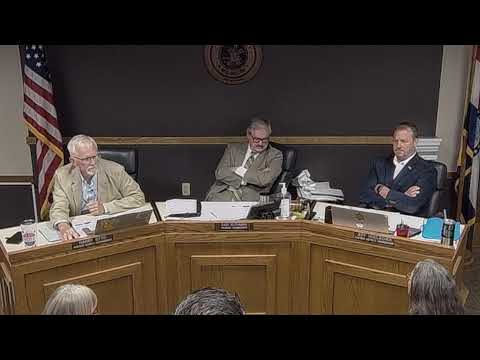
Ed Gulliver, an engineer with Barr Engineering Company, updated the Cole County Commission on the Binder Lake (referred to in the presentation as Bender) and Naches watershed study and proposed projects to reduce stormwater impacts.
Gulliver said the study modeled storm events, identified completed sediment-removal work and a Ravenwood project that is currently out for bid, and described a conceptual detention basin site south of Pioneer Trail School that could hold back stormwater and reduce downstream flooding near Business 50 and Apache. "We could remove about 50% of the solids and about a quarter of the phosphorus," Gulliver said, describing modeled water-quality benefits.
Gulliver told the commission the Department of Natural Resources (DNR) has listed Bender Lake as impaired for high nutrients (chlorophyll a, phosphorus and nitrogen), which he said creates eligibility for state or federal grant programs. He explained that DNR agreed to write a watershed-based plan on condition of local sponsorship and committed partners. "Once the plan is in place, then you apply for funds for projects; the federal government typically funds 60% and local partners provide a 40% match," Gulliver said.
Commissioners asked about project cost and ownership. The presenter said cost estimates are "TBD" until the watershed plan and project scopes are finalized and cautioned the timeline is multi-year. He added the school district indicated it would maintain features on its property and that private-property projects could proceed with owner agreement. "The plan itself is not a binding agreement; it’s a framework that helps you apply for funding," Gulliver said.
Next steps identified during the meeting included DNR drafting the watershed plan with input from county staff, parks and the school district, then pursuing competitive grants that require a local match. The commission did not take a vote on a specific project at this meeting; instead members directed staff to continue planning with the identified partners.
The presentation began during the public works agenda item and was introduced by the chair. The commission discussion emphasized the need for accurate project scoping and realistic cost estimates before pursuing grant applications.