Get Full Government Meeting Transcripts, Videos, & Alerts Forever!
Get email alerts on the Education Budget topic
No spam. Unsubscribe anytime.
Long Hill presents tentative $24.0 million budget, cites rising health-care costs and $1.1M levy increase
Summary
Presenter for the Long Hill Township School District outlined a tentative $24,029,423 budget for 2026-27, saying a projected 23.5% rise in health-care costs and a $661,000 health-adjustment drive an approximately $1.1 million tax levy increase that would cost an average homeowner about $360 a year.
The Presenter for the Long Hill Township School District detailed a tentative $24,029,423 budget for 2026-27 and said the district's plan relies on conservative revenue estimates and restricted-reserve withdrawals to avoid a larger tax impact. "This tentative budget includes $447,318 increase in state aid as per the governor's address on March 10," the Presenter said.
The plan, described as preliminary and scheduled for formal adoption later in the process, groups operating, special-revenue (state and federal grants) and debt service into a single revenue picture. The Presenter said the district expects a general fund operating budget of approximately $22,900,000 and that the total tax levy will account for roughly 88.2% of revenue.
Why it matters: the Presenter said rising mandatory costs—particularly health insurance—are the principal drivers of the levy increase. "Health care this year is projected to increase a whopping 23.5%," the Presenter said, and the presentation cited "Chapter 44" as shifting more of the premium burden onto the district. Those cost pressures, combined with a small enrollment adjustment and the statutorily allowed health-care adjustment of $661,000, produce an approximately $1,100,000 increase in the levy for 2026-27.
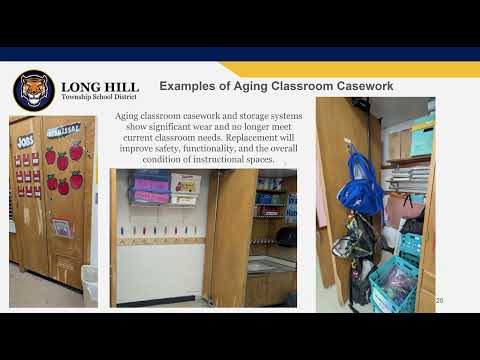
Budget priorities and reserves: the district is using a mix of restricted reserves and targeted draws to fund capital and maintenance needs while seeking to limit the tax impact. The Presenter said the district will draw $354,000 from the maintenance reserve for building preservation work and is using the capital reserve for projects such as an HVAC upgrade at Central Middle School and playground and athletic backstop improvements at Gillette School. The Presenter said those reserve-funded projects will be completed with "0 impact on the tax levy."
Program and grant spending: the budget allocates federal grant dollars to classroom and special-education supports, including $188,000 in IDEA funds and roughly $40,000 in ESEA (Title I—IV) funds for supplemental instruction and STEAM activities. The Presenter also described program enhancements: a new language-disabled section at Millington School, an increase in BCBA services to four days per week, and completion of a 1-to-1 device initiative. The district is exploring a tuition-based model for its summer institute to create a sustainable revenue stream.
Tax-burden estimate and fiscal choices: the Presenter translated the levy change into household impact, estimating an average Long Hill homeowner with a $681,000 assessed home would pay about $360 more per year (about $30 per month) when combining operating and debt-service impacts. The Presenter also said the district will not use any prior-year "bank cap" authority for 2026-27, preserving that option for future years.
What remains open: the presentation is a recorded overview and the Presenter noted viewers cannot ask questions live; feedback is invited by phone or email. The timeline requires the adopted budget to be submitted to the county superintendent by March 27. The presentation did not record public comment, motions or votes on the budget during the session.
The district emphasized maintaining reserves and stated that its per-pupil spending remains lower than many neighboring districts in Morris County.