Get Full Government Meeting Transcripts, Videos, & Alerts Forever!
Get email alerts on the Animal Shelter Funding topic
No spam. Unsubscribe anytime.
Council weighs plan to close roughly $1.39 million Metro animal shelter shortfall
Summary
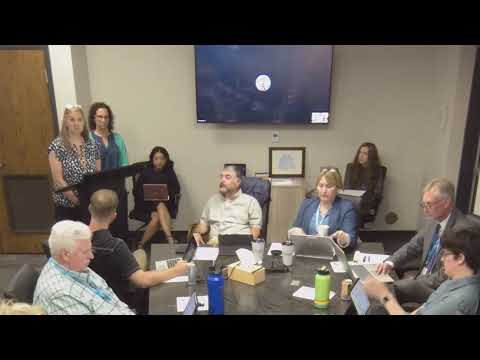
City staff told the council the Metro Animal Shelter replacement project faces an estimated $1,388,000 gap after design and market-cost revisions; Krista Johnson, the public services director, presented options including using unallocated tax proceeds, Metro fund balances and a project transfer, while warning that cuts could reduce capacity or building functionality.
Krista Johnson, the city’s public services director, told the council on the meeting that the Metro Animal Shelter replacement, originally budgeted in 2024 at roughly $7.3 million, now shows a current total expense figure presented by staff as $6,868,800 and an estimated funding gap of $1,388,000.
“In our estimate process we did see a consultant estimate that was higher than the 2024 number, and staff worked hard with the construction manager-at-risk to reduce cost,” Johnson said, outlining the steps that produced the present figure. She cautioned that the numbers are estimates until the construction manager-at-risk issues a guaranteed maximum price in the coming two months.
Why it matters: the project would replace the current Metro facility and staff said some cost-saving options — such as reducing the kennel count to 16 (the plan was for about 32) or simplifying the mechanical/HVAC system — would compromise capacity or infection‑control functionality. Johnson said a mechanical change could save roughly $127,000 but would eliminate the dual HVAC arrangement designed “so that air between the feline area and other areas were not shared because they can carry certain diseases that are airborne.”
To close the gap, staff proposed a three-part approach: apply the unallocated portion of the expiring special/spec tax attributable to Metro (presented in staff figures as $768,280), use $535,017 from unappropriated Metro fund balances contributed by participating agencies, and transfer funds from another city project referenced in the record. Johnson said those three steps would bring the project balance to zero if council directs staff to proceed with that plan.
Council members sought clarity on the fund sources. Jill, a city finance staff member introduced during the discussion, explained the Metro fund balance arose historically from participating agencies’ depreciation-style payments and that contract changes now generally require agencies to pay their share up front rather than letting the city accumulate that balance.
Several council members flagged market-driven cost pressures. One councilor noted that “general structural steel project material costs are gone up 15 to 25% just since the beginning of this year,” a factor staff identified as driving recent increases in the shelter estimate.
Next steps: staff said they will receive a guaranteed maximum price from the construction manager-at-risk within about two months; that GMP may require scope adjustments. Council did not record a formal vote on the funding package during the discussion and staff requested council guidance on whether to use the identified funds and transfers to fully fund the replacement project.