Get Full Government Meeting Transcripts, Videos, & Alerts Forever!
Get email alerts on the Board Governance Training topic
No spam. Unsubscribe anytime.
Providence board approves training engagement with Council of Great City Schools after debate over funding and procurement
Summary
The Providence School Board voted to engage the Council of Great City Schools for professional development, using a first-year philanthropic payment administered by the Rhode Island Foundation and preserving a board vote before any public funds would be spent in year two. The decision followed legal and procurement questions and a 7-1-2 recorded outcome.
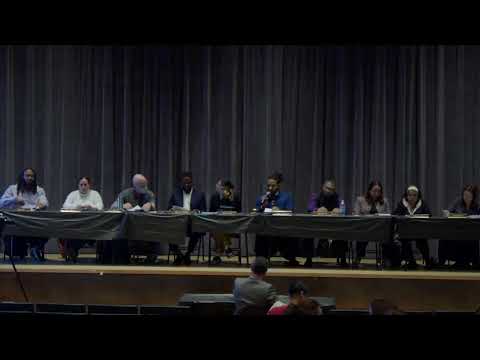
The Providence School Board on March 19, 2025 approved a professional development engagement with the Council of Great City Schools (CGCS), accepting a first-year arrangement funded by conditioned philanthropic dollars administered by the Rhode Island Foundation and reserving the boards right to decide before any public funds would be expended for a second year. The motion passed after extended legal and procurement discussion.
The boards debate centered on how the engagement was selected and funded. Charlie Ruggiero, the districts solicitor, said the first-year $50,000 nonrefundable payment is being provided through philanthropic funds administered by the Rhode Island Foundation and that the CGCS agreed to amend its standard professional services agreement so the board would have an opportunity to discontinue the contract before any public dollars were committed for a second year. "It's kind of like a free trial period," Ruggiero said, urging the board to view the first year as an opportunity to assess the value of the work before deciding on public funding.
Several board members pressed for clarity about procurement and donor conditions. Council members asked whether donor-imposed conditions made the contract effectively a sole-source engagement and whether the district had adequate paper trails documenting the foundations allocation. Ruggiero advised that private grants may legitimately condition use of funds and that one of the permissible source-selection methods under the Municipal Purchasing Act can apply when private funding specifies a provider. He said the district had negotiated language allowing the board to decide whether to continue before public money is committed.
Board members also discussed pricing incentives. Ruggiero summarized terms the board reviewed: the two-year engagement was structured with a $50,000 first-year fee (covered by the private grant) and an original two-year cost of $100,000; CGCS offered a modest discount if the board approved the contract unanimously. Some board members said the discount and unanimity condition sounded unusual; others urged proceeding to avoid further delay for governance training tied to the districts return-to-local-control work.
The motion to proceed was seconded and adopted with recorded dissents and abstentions: President Stevens voted no; Dr. Steven Williamson and Chairman Mejganbeau abstained; the remaining members voted yes. The board and district counsel said the CGCS memorandum would be incorporated into the meeting record and that the district planned to share the professional services agreement with board members prior to any future vote to expend public funds.
District staff said the engagement is intended to support a student-outcomes governance framework and help the board prepare for a return to greater local control; staff noted the first-year offer reduces immediate fiscal exposure because philanthropic funds subsidize the work. Staff also emphasized that the board can discontinue the engagement prior to year two if it decides not to fund continuation.
Next steps: the board added the CGCS memorandum to the record, staff said they would make the proposed agreement available to board members for review, and the board retains the option to vote on any public-money commitment for a second year once it has reviewed the contract and additional documentation.