Get Full Government Meeting Transcripts, Videos, & Alerts Forever!
Get email alerts on the School Closures topic
No spam. Unsubscribe anytime.
Parents, teachers and librarians urge board to halt Broad Street/ASF closure; dozens testify about transparency and library losses
Summary
Public comment filled the meeting with opposition to the proposed closure of Allan Shawn Feinstein (Broad Street) Elementary and complaints about library consolidations, alleged disinvestment and lack of community input; speakers asked the board to use its advisory role to stop closures and demand documents and meeting minutes.
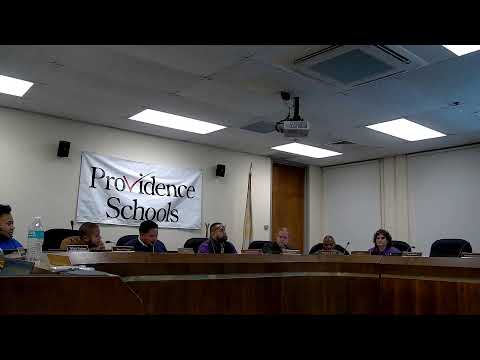
An extended public-comment period at the Providence School Board meeting focused overwhelmingly on opposition to planned school closures — especially Allan Shawn Feinstein (ASF) at Broad Street — and on the consolidation or loss of school libraries and librarians.
Emily Holloman, a music teacher at Broad Street Elementary, opened public testimony by urging the board to "stop the rushed closing of Broad Street Elementary School" and to allow respectful dialogue and community input before final decisions. Holloman contrasted Providence’s process with Cranston’s, saying Cranston sought community consent and held large public engagements before closures.
Multiple speakers — teachers, parents, librarians and students — told the board they had not been provided adequate notice or meaningful opportunities for input. A retired Providence school librarian described library relocations and the practical impact on students’ access to books. Peter Canal, a school librarian, detailed district reading initiatives run by librarians and argued for restoring librarians to consolidated sites.
Students and parents testified about neighborhood impacts: Patrick Shelton, a 5th-grade teacher, said more than 70% of ASF students walk to school and warned that closures would disrupt neighborhood access and likely worsen outcomes for displaced students. Community advocates provided facility-condition and funding data they say show years of disinvestment at ASF and uneven investment across the district, pointing to a large allocation elsewhere (Spaziano) while ASF allegedly received declining capital allotments.
Board response and procedural outcomes: The board voted to extend public comment so everyone on the sign-up list could speak. Several commenters asked the board to use advisory authority under the Crowley Act to ask the commissioner to pause the closure decision and provide meeting minutes and supporting documents.
Why it matters: The closure debate involves neighborhood school access, facility-investment choices tied to bond money, and the board’s advisory role under recent Crowley Act reforms. Community members argued the process lacked transparency and that the board has a duty to press for more information.
Next steps: Community organizers said they would continue to press the board and state representatives for transparency and to seek a reversal or pause of closure plans; the board asked staff to consider additional TAP-focused meetings and clearer metric slides to ground future advisory work.