Get Full Government Meeting Transcripts, Videos, & Alerts Forever!
Get email alerts on the Nonprofit Funding topic
No spam. Unsubscribe anytime.
Kodiak assembly debates approach to awarding limited nonprofit grants; manager outlines funding sources
Summary
Assembly reviewed nonprofit grant packets covering health, social services, and education lines and debated Smiley’s two-tier funding proposal and use of tourism, opioid and fisheries funds to close gaps; staff will add funding-source columns and return with an updated packet July 30.
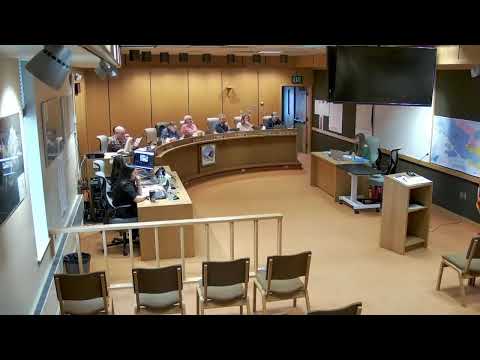
The Kodiak Island Borough Assembly spent the July 9 work session weighing how to distribute constrained nonprofit grant dollars and which funding sources to tap to cover shortfalls.
Manager Williams told the assembly that the packet included three nonprofit funding groups: health and social services (an $85,000 line with about $277,000 in requests), education/culture/recreation (an $85,000 line with roughly $122,000 in asks) and a $100,000 allocation for college and libraries. She said the borough also has a fisheries economic development fund and an opioid fund balance of $68,169; one prior recipient will return $4,880.43 to the fisheries fund, increasing that balance once processed.
“We have $85,000 for that line item with $277,000 plus in requests,” Manager Williams said, noting the duplicate entries across different fund sources and asking the assembly to consider the full range of available funds.
Assemblymember Smiley proposed a two-tier approach to awards, suggesting smaller starter grants for first-time applicants and larger awards for established organizations. “I think it’s important to have two categories of funding,” Smiley said, adding that the borough should be cautious about funding personnel and should instead prioritize project‑based budgets and clearer financial statements from applicants.
Public commenters also urged continued support. Susan Smith, representing the Brother Francis homeless shelter, told the assembly the shelter provided more than 4,000 bed nights and over 15,000 meals last year, and said evening food service is up 8 percent over last year—evidence, she said, of growing need.
Members debated whether to move some museum and visitor-related requests into the tourism development fund to close an $11,000 gap under one recommended option. Manager Williams confirmed that some museum applicants could be eligible for tourism funds and said staff would add a column identifying the recommended funding source for each request (general fund, tourism development, opioid fund, fisheries economic development) to the packet for the July 30 follow-up work session.
Assembly members also sought clarity on program administration: when asked if CANNA is the funding source for WIC and the infant learning program, Manager Williams clarified CANNA is a local administrator, not the funder, and that the programs are state-funded but rely on local sponsors to continue operations.
Next steps: staff will add a funding‑source column and include missed grant reports (such as Hope Community Resources) in the revised packet for the July 30 meeting so members can return with a more detailed funding plan.