Get Full Government Meeting Transcripts, Videos, & Alerts Forever!
Get email alerts on the Special Education topic
No spam. Unsubscribe anytime.
Board told Exceptional Children program faces roughly $1.47 million shortfall as needs rise
Summary
District EC leaders told the board that rising enrollment of high‑needs students and more 1:1 and related services have created extraordinary budget pressure; presenters recommended monitoring staffing, maximizing reimbursements and pursuing additional funding from county/state sources.
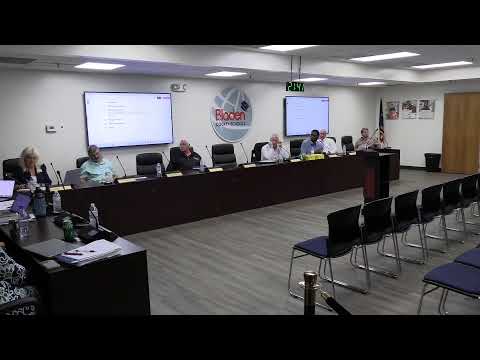
District administrators warned the Bladen County Board of Education on Oct. 13 that the Exceptional Children (EC) program is under growing financial strain as enrollment of students with complex medical and behavioral needs rises and related services costs escalate.
"We're serving 629 students" in EC right now, Cheryl White Smith told the board, and she said pending referrals and transfers could increase that number before the Dec. 1 funding count. She added, "Mandated supports and increased student needs are the primary drivers of our rising cost."
White Smith presented a budget comparison showing four major EC cost drivers: instructional staffing (teachers, assistants, 1:1 personnel), benefit increases, related services (occupational and physical therapy, speech-language pathology, nursing, audiology, supports for visual impairment), and transportation. She told the board the combination of higher-intensity caseloads and limited state/federal allocation produced a projected shortfall in the EC budget for 2025-26. The transcript recorded the presenter's projected shortfall as approximately $1.47 million; the presenter characterized the gap as a substantial and immediate concern.
Board members asked detailed questions about caseloads and compliance. White Smith said many self-contained EC classrooms are at or near state-recommended maximums, and that some teachers are effectively serving larger-than-recommended caseloads by adding paraprofessional support rather than hiring additional teachers. She acknowledged two recently enrolled high-school students arrived with noncompliant IEP packets and that the district is working to bring those files into compliance.
What administrators want to do next: White Smith and other leaders said the district will continue to monitor staffing allocations, pursue grant and Medicaid reimbursement opportunities, and press for additional recurring funding—locally, at the state level and through federal advocacy. Superintendent Dr. Atkinson and board members discussed scheduling a joint meeting with county commissioners to make the budget case and explore whether county allocations can be adjusted to help cover recurring EC costs.
Why it matters: Federal law (IDEA) requires districts to provide the services written into students' IEPs regardless of cost; administrators said that legal obligation, together with rising referrals of high-needs students, leaves the district with few discretionary levers beyond staffing and reimbursement maximization.
Next steps: Administrators said they would return with more detailed staffing and cost information and recommended that the board and county commissioners convene to discuss a funding response.
Sources: Presentation by Cheryl White Smith and subsequent board Q&A during the Oct. 13 board meeting.