Get Full Government Meeting Transcripts, Videos, & Alerts Forever!
Get email alerts on the House Rules Rule Hr139 topic
No spam. Unsubscribe anytime.
House Rules Committee adopts rule to send Sunshine Protection Act to the floor; key amendments fail
Summary
The House Rules Committee voted 6‑4 to report a rule that would bring H.R.139, the Sunshine Protection Act of 2025, to the House floor under a closed/structured package. Members debated whether to substitute a standard‑time alternative and offered several amendments—including veterans and Cuba‑related measures—that were rejected in recorded votes.
The House Rules Committee on Monday approved a rule to bring H.R.139, the Sunshine Protection Act of 2025, to the House floor, adopting the motion to report by voice and a subsequent roll call that ended 6 yeas to 4 nays.
The rule, moved by Representative Griffith, waives points of order against consideration of the bill, provides one hour of general debate equally divided and controlled by the chair and ranking minority members of the Committee on Energy and Commerce, allows one motion to recommit and includes structured procedures for consideration of related appropriations and policy bills (H.R.8595, H.R.9237 and H.R.1181). The package also contains limitations on which amendments may be offered and specifies amendment procedures for each included bill.
Why it matters: H.R.139 would make daylight saving time permanent nationwide for the states that choose it while exempting jurisdictions that already observe permanent standard time (Arizona, Hawaii, Puerto Rico, Guam and the U.S. Virgin Islands). The change would affect daily schedules nationwide, and the committee debate highlighted competing claims about health, public‑safety and economic impacts.
Debate and amendments Representative Griffith introduced the motion and described the rule’s structure before the committee took up several member amendments. Ranking Member McGovern objected to parts of the rule and moved to strike section 7, which would have brought H.R.9237 (the Take Care of America’s Veterans Act) to the floor under a closed rule. McGovern said the veterans bill would fund benefits by cutting others and urged the committee to return the measure to committee. "There is significant opposition amongst our veterans community," McGovern said, pressing members to support his motion.
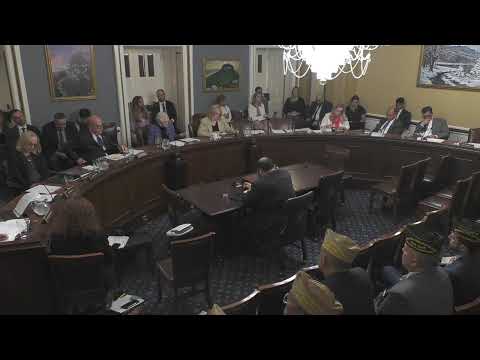
A member identified in the transcript as Miss Ledger Fernandez noted the presence of many Veterans of Foreign Wars members in the hearing room and voiced support for McGovern’s position. After a voice vote yielded a ruling for the 'noes,' McGovern requested a roll call; the clerk reported the recorded result as 4 yeas and 6 nays, and the amendment failed.
Representative Scanlon offered a separate amendment to substitute the Sunshine for Our Kids Act (H.R.9638), which would make permanent standard time the national default while preserving states’ ability to adopt permanent daylight saving time by state law. Scanlon argued medical and scientific evidence favors permanent standard time for health and safety, particularly for children. "We should follow the science and prioritize Americans’ health," Scanlon said. That amendment also failed on a recorded vote, 4 yeas to 6 nays.
Other amendments addressed international and humanitarian concerns tied to appropriations language. A member who identified herself variously in the transcript (recorded as Miss Leisure/Miss Ledger Fernandez) pushed for an amendment requiring a State Department report on how U.S. policy affects Cuba’s health system and urged protections for medical shipments; another amendment would have struck provisions penalizing countries that accept Cuban medical professionals. Both amendments were rejected in recorded votes (each reported 4 yeas, 6 nays).
Supporters and opponents Chairman Guthrie, who testified as a witness, urged swift action on H.R.139, saying permanent daylight saving time would improve safety and boost local economies. "Locking the clock all year round would have positive impacts on sleep schedules, energy conservation, motor vehicle safety, and our economy," Guthrie said.
Opponents and some medical experts cited in the record urged caution or a different approach. Ranking Member Pallone and Representative Scanlon noted research linking clock transitions to short‑term health harms and emphasized that the more fundamental question is which permanent regime — standard time or daylight saving time — is preferable for public health.
Votes and next steps After debate and failed amendments, the committee agreed to the Griffith motion to report the rule package. The final recorded roll call showed 6 yeas and 4 nays; the committee chair announced she would manage the rule for the majority and Representative McGovern would manage it for the minority. The rule now moves to the full House for floor consideration under the terms the committee adopted.
The committee adjourned following the vote.