Get Full Government Meeting Transcripts, Videos, & Alerts Forever!
Get email alerts on the Housing topic
No spam. Unsubscribe anytime.
Consultants outline Sheridan housing plan, warn many workers can’t afford median homes
Summary
Matrix Design Group and the Denver Regional Council of Governments presented a draft Sheridan Housing Implementation Plan on July 15, highlighting limited housing diversity, high home prices relative to local wages, displacement risk in naturally affordable housing, and an outreach plan including pop-ups and a public survey.
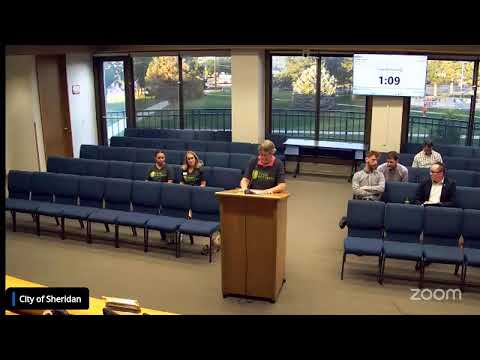
Max Monk of the Denver Regional Council of Governments and consultants from Matrix Design Group presented the Sheridan Housing Implementation Plan (SHIP) to the Sheridan City Council on July 15, describing the project’s scope, funding and next steps.
“We exist to help governments plan together and instead of silos,” Max Monk said, explaining that DRCOG administered Livable Centers Program funds that supported the SHIP. Jen, director of planning at Matrix Design Group, said the team’s work so far includes an existing-conditions review, a draft housing-market study and an engagement plan. “Housing is really at the center of almost everything,” she said.
Christian Aaron, Matrix’s project manager and research lead, summarized draft findings: Sheridan’s housing stock is heavily skewed toward single-family detached homes, construction costs have risen since the pandemic, and many local occupations do not earn enough to buy the median home. “In every occupation in Sheridan, the median worker doesn’t earn enough to afford the median home,” Christian said, noting the gap drives a need for diverse housing types and strategies to preserve existing affordable units.
The market study found the median rental unit in Sheridan is roughly $1,600 per month and estimated a household would need to earn about $60,000 annually to afford that rent; the median renter household in Sheridan earns about $50,000, the consultants said. The team also flagged much of Sheridan’s affordable housing as NOAH (naturally occurring affordable housing), which is more vulnerable to future rent increases and potential displacement.
Nick Nolte, deputy project manager, described the phased schedule and deliverables: the first phase established existing conditions and draft recommendations; the second phase, through December, will produce actionable strategies for zoning changes, multimodal connections and affordability protections. The presentation highlighted opportunities to encourage transit-supportive infill near future transit stations and to stack funding sources for affordable projects.
Consultants detailed the engagement plan: a project website and map-based comment tool, stakeholder interviews, three public pop-up events (one in June already completed and another planned for the Sheridan Celebrates festival in September), and a project survey. Staff said flyers and surveys are available in English and Spanish and encouraged council members to help distribute materials.
Councilors and residents questioned survey wording and reach, particularly whether the survey captures people who both live and work in Sheridan and whether outreach includes trailer parks and school employees. Staff said they had shared the survey with the housing authority and would follow up with the school district and neighborhood events such as National Night Out to increase participation.
The consultants and staff requested more public responses before finalizing recommendations and said they would continue stakeholder interviews and community outreach through the fall. The team emphasized the final SHIP will be an implementation-focused document, with multiple reviews with city staff before submission in December.
What’s next: Matrix and DRCOG will continue outreach and refine recommendations; the consultant team is collecting survey responses and stakeholder input and plans to deliver a final implementation strategy by December.