Get Full Government Meeting Transcripts, Videos, & Alerts Forever!
Get email alerts on the Local Income Tax Reform topic
No spam. Unsubscribe anytime.
Scott County council to launch multi-jurisdictional meetings to map new local income-tax system
Summary
Council members agreed to begin "must" meetings with nearby municipalities, aided by a consultant, to plan for a state-driven overhaul that replaces several local income-tax buckets with a county-level income tax; officials warned municipalities that opt-out could face revenue shortfalls.
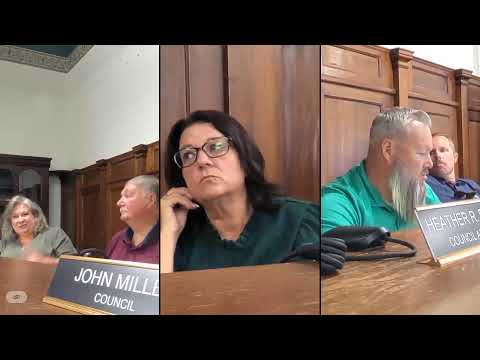
Scott County council members agreed at their meeting to begin multi-jurisdictional "must" meetings to prepare for an incoming state law that will replace current local income-tax buckets with a county-level income tax and related municipal options. The council chair volunteered to lead outreach to nearby cities and to start scheduling the meetings.
The change described by a presenter at the meeting would shift the county from a property-tax-centered system to an income-tax model based on where residents live rather than where they work. "It's where they live," the presenter said when explaining the tax base and added that municipalities could choose to levy up to 1.2% on their own or opt into a countywide rate. The presenter warned that cities that go it alone could be revenue‑short, citing New Albany as an example of a community that might be "very short" if it leaves a county plan.
Speakers stressed that the group commonly called the "must" meetings produces a nonbinding plan for the state legislature. A presenter who described the consultant role said Baker Tilly (the transcript also refers to the name alternately as "Anchor Tilly") facilitates the meetings, prepares agendas and runs revenue scenarios so local officials can see how different options would affect jurisdictions. "If a neutral rate is what you want, we'll try to get you there," the presenter said about facilitation services.
Council members emphasized transparency and public access. The chair said Scott County would record and post meetings online and keep recordings available. Officials noted the task-force sessions are not formal public hearings and that allowing comments is at the task force's discretion; presenters said turnout at those sessions has generally been low.
Scott County will retain a separate special-purpose local income tax that funds the county jail; the chair said that levy remains in place until its scheduled dissolution years from now. Otherwise, public-safety-related local income-tax buckets will be replaced under the new county-level structure, and the council will have significant responsibility in allocating funds and setting rates.
Council members did not take a formal vote on any ordinance or tax measure at the meeting. The chair said he would reach out to city officials to set the task-force schedule and bring back plans for the council's consideration. The meeting closed without final decisions on rates; any plan from the "must" group would be nonbinding and provided to the legislature for consideration.