Get Full Government Meeting Transcripts, Videos, & Alerts Forever!
Get email alerts on the Ethics Investigation topic
No spam. Unsubscribe anytime.
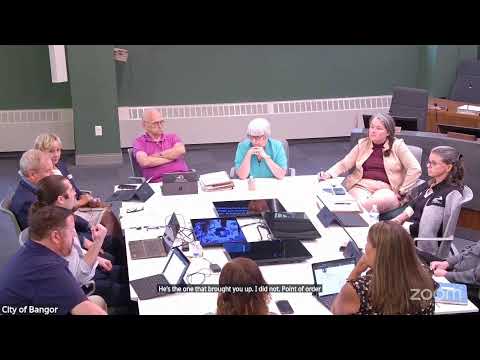
Bangor council directs staff to draft order after ethics board finds violations, adds training option
Summary
At a July 13 workshop the Bangor City Council instructed staff to draft a proposed council order reflecting an ethics board advisory opinion that found violations of the city’s ethics code; the council added a requirement that the implicated councilor undertake training with the city legal department as a penalty option.
At a July 13 city council workshop, the Bangor City Council directed staff to prepare a proposed council order responding to an ethics board advisory opinion that found multiple violations of the city’s code of ethics by a council member.
David Cepcak, the city solicitor, told councilors the ethics board found by majority votes that the council member violated sections 33‑13.1(b) and 33‑13.1(c) (rules about use of title and the affirmative duty to disclaim when capacity is ambiguous) and section 33‑1 (the general standard of conduct). “Their findings are advisory only,” Cepcak said, adding that the council must decide whether to adopt those findings and what penalty, if any, to include in a proposed council order.
Why it matters: the council’s next formal step will shape whether and how the city publicly documents the board’s advisory findings and whether the council imposes a sanction — from no penalty with an explanatory statement to public censure, removal from committee assignments for a limited period, a civil fine, or required training.
Councilor Beth Beck moved that staff prepare an order reflecting the ethics board’s findings and include a training requirement as the penalty option; another councilor seconded the motion. Beck said the order should “reiterate the fact that when we are speaking … if you’re recognized as a counselor, you know, I’m here as an individual” so there is no ambiguity about a speaker’s capacity. The motion was amended on the floor to specify that the training be conducted with the city’s legal department and then put to a roll‑call vote.
Council took the vote after discussion about whether to apply penalty options that are currently under consideration in proposed ethics code revisions. Several councilors cautioned against applying rules or penalties that have not yet been adopted; Cepcak said the censure and civil penalty options already exist in the code, and described other options that have been proposed for first reading that evening.
On the amended motion directing staff to prepare a proposed council order that follows the ethics board’s findings and includes training with the legal department, the council voted in the affirmative. The council will consider the formal proposed order and any vote at a subsequent regular council meeting (Cepcak and several councilors referenced a two‑week timeline for returning the item to the agenda).
The solicitor also reminded councilors that the accused councilor should be given the opportunity to make a defense statement but should not participate in the council’s deliberations on the matter.
Next steps: staff will draft the proposed council order — including the training option specified by the council — for presentation and formal deliberation at a future council meeting, when the council can vote to adopt findings, choose whether to impose a penalty, or take another course of action.