Get Full Government Meeting Transcripts, Videos, & Alerts Forever!
Get email alerts on the Lodging Tax Allocation topic
No spam. Unsubscribe anytime.
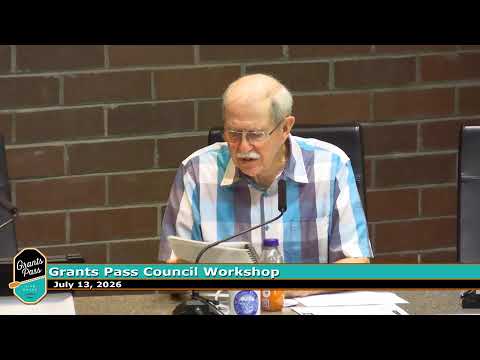
Grants Pass council keeps lodging tax allocation unchanged as state law shifts take effect
Summary
After staff outlined how HB 4148 allows cities to shift lodging-tax dollars to city services, Grants Pass City Council voted to retain current lodging-tax allocations. Staff said the shift could move about $43,900 but would require level‑of‑service choices if adopted later.
Grants Pass City Council voted to retain the city’s existing lodging‑tax allocation after a prolonged discussion about new state rules that take effect Jan. 1, 2027.
City staff told the council the state’s HB 4148 removes a previous moratorium and gives local governments more flexibility to fund city or county services, including emergency or non‑emergency public‑safety operations. "So, yes, you can move $43,900 from tourism promotion and tourism‑related facilities into the city operations or specifically public safety if you so choose," the staff member said during the presentation.
Staff said the change could be made without changing the city’s total tax rate but would alter how much money goes to tourism promotion, parks, public safety and other programs. The city’s current municipal code and historic moratorium dates have produced a distribution that staff presented as 40% tourism promotion, 11.67% tourism‑related facilities, 22% public safety and the remainder split among parks, economic development and downtown development.
Councilors debated whether the modest sum under discussion — roughly $43,900 in the example shown — was better retained to fund tourism promotion and parks or shifted to support general‑fund needs such as public safety. Supporters of keeping the allocation said reducing promotion could limit future lodging revenues and damage small programs that rely on lodging‑tax reserves; those favoring a reallocation emphasized tightening general‑fund reserves and the potential immediate benefit to public safety.
Councilor Victoria moved to keep the lodging‑tax allocation unchanged. The roll‑call vote produced an initial tie, and the mayor cast the tie‑breaking vote to preserve the status quo. The motion passed and staff will continue with the current distribution while council retains the option to revisit allocations later.
The council was careful to distinguish the procedural effect of a motion to keep the allocation from the option of taking no motion at a meeting; legal counsel clarified that leaving a matter without action is sometimes the clearest way to avoid a six‑month reconsideration restriction. Staff said any future change would require updating municipal code and come back to council with level‑of‑service options showing exactly where and how a small reallocation would affect tourism programs, facilities and park capital projects.
Next steps: Staff said they will leave current allocations in place and provide follow‑up information if council asks for specific level‑of‑service scenarios tied to any potential reallocation.