Get Full Government Meeting Transcripts, Videos, & Alerts Forever!
Get email alerts on the Technology National Security topic
No spam. Unsubscribe anytime.
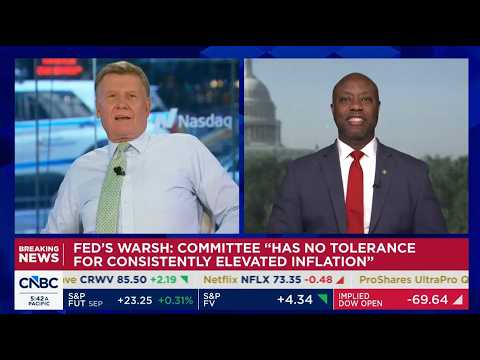
Sen. Tim Scott urges AI investment, says data centers must 'pay their way,' and weighs in on Israel-Iran tensions
Summary
Sen. Tim Scott urged a national focus on AI, argued South Carolina data centers should cover their electricity and water impacts, and made stark remarks about October 7 and Iran during an interview; panelists did not reach consensus on metrics or policy responses.
Sen. Tim Scott used a broadcast interview to press for a U.S. competitive focus on artificial intelligence and to raise local concerns about data centers in South Carolina. "The real question we should ask is, how do we make sure that these data centers pay their way as it relates to electricity and water use?" Scott said, arguing the state must resolve those issues so constituents can "breathe a sigh of relief." He framed AI as a decisive factor in whether "China or ... America" wins the future and described AI as likely to augment workers rather than cause mass layoffs.
Scott also addressed international security, telling the panel that events on October 7, 2023, marked "the beginning of an attempt at a Jewish genocide," and contrasted presidential responses to crises in the Middle East. He said he favored a posture that prevents Iran from becoming a nuclear power and suggested that different leadership styles yield different results in crisis response.
During the conversation Scott recalled late Sen. Lindsey Graham, saying Graham was a close friend and recalling personal moments including Graham's role in the confirmation of Brett Kavanaugh and service on budget matters. "He was one of the four senators I invited to my wedding," Scott said, calling Graham's legislative impact significant.
Panelists did not reach agreement on policy prescriptions for data centers, and no specific local regulations or bills were proposed during the segment. Panelists discussed trade-offs around permitting, resource use and local opposition in parts of South Carolina but did not identify a formal mechanism to require utilities or data centers to offset their footprint within the interview. On foreign policy, Scott's forceful language about October 7 and Iran was presented as his assessment and was not vetted or rebutted by an independent expert in the segment.
The interview closed after additional topical detours and personal remarks.