Get Full Government Meeting Transcripts, Videos, & Alerts Forever!
Get email alerts on the Food Safety topic
No spam. Unsubscribe anytime.
Northborough HHS webinar urges precautions for summer barbecues amid Cyclospora outbreak
Summary
Town of Northborough Health and Human Services hosted a webinar where health agents Chris Craig and Vinny Goo outlined grilling and picnic safety: keep hot foods hot and cold foods cold, use thermometers, avoid leaving perishable foods in the temperature 'danger zone,' and take extra care with bagged salads during a Cyclospora outbreak.
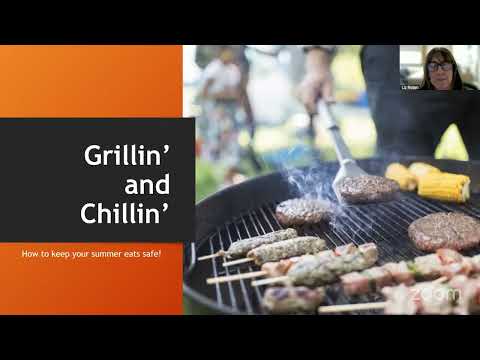
Town of Northborough Health and Human Services hosted an online webinar on summer food safety, with outreach coordinator Liz Nolan introducing health agents Chris Craig and Vinny Goo to present practical steps residents can take to reduce foodborne illness at picnics and barbecues.
Chris Craig, a health agent, said the ‘‘temperature danger zone’’ is where bacteria grow rapidly and warned that ‘‘bacteria can double in as little as 20 minutes.’’ He advised keeping perishable, temperature-controlled foods (TCS foods) at 41°F or below for cold storage and 135°F or above for hot-holding, and not leaving TCS foods out for more than two hours at moderate temperatures or more than one hour when outdoor temperatures are very warm.
Vinny Goo, a health agent, offered a simple heuristic for grillers: ‘‘40 to 140’’ to avoid the danger zone, and recommended using a dedicated meat thermometer for barbecues. He emphasized that ground meats carry higher contamination risk and that a thermometer helps confirm safe internal temperatures.
Craig added specific guidance for vulnerable people, saying that older adults, young children and immunocompromised residents should avoid undercooked meats; he recommended poultry reach an internal temperature of 165°F and urged ground beef be cooked to at least 160°F.
On produce safety, Craig noted an ongoing Cyclospora outbreak affecting fresh fruits and vegetables and urged extra caution: run fresh produce under cold running water, scrub firm items such as melons and potatoes, dry produce with a paper towel, and consider vinegar baths for higher-risk items. ‘‘I highly recommend cooked vegetables until... it’s kind of determined exactly what the cause is,’’ he said, advising cooking as an extra kill-step when feasible.
Both presenters emphasized avoiding cross-contamination: keep raw meat and seafood separate from ready-to-eat foods, use separate cutting boards and utensils, seal raw meats to prevent leakage, and clean and sanitize preparation surfaces. For outdoor gatherings, they recommended packing coolers tightly with ice, testing cooler performance for extended trips, and using a thermometer to monitor cooler temperatures.
In a question-and-answer session, presenters recommended keeping refrigerator and freezer doors closed during short power outages, using an internal thermostat to verify temperatures once power returns, and moving food to a well-iced cooler if outages are prolonged. Craig said that long-term outages over 24 hours warrant discarding refrigerated items. On bagged salads and berries, he warned that mixed and shredded products can carry higher risk because they combine leaves from many heads and are harder to wash thoroughly; he noted federal agencies including the CDC and FDA were investigating the outbreak.
The webinar concluded with Nolan thanking the presenters and sharing that resources from the FDA, USDA, CDC and local Health and Human Services would be posted on YouTube. Nolan also announced the next webinar for August 11.
Resources mentioned in the webinar and posted by Northborough HHS include CDC, FDA and USDA guidance on food safety and handling.