Get Full Government Meeting Transcripts, Videos, & Alerts Forever!
Get email alerts on the Municipal Budget topic
No spam. Unsubscribe anytime.
Palm Coast council sets max millage of 4.2296 as budget starting point amid risks from state homestead amendment
Summary
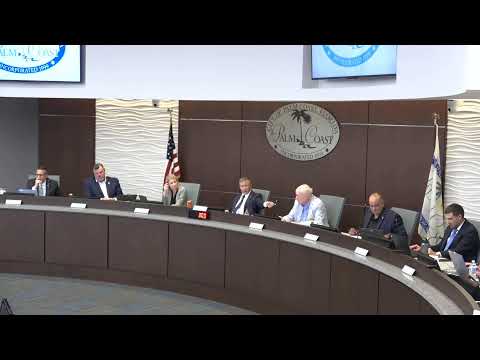
At a July 14 budget workshop the Palm Coast City Council directed staff to use a maximum millage rate of 4.2296 for the FY2027 public hearings, after hearing finance and property‑appraiser estimates that a proposed state homestead amendment could cut local revenues by millions and force tradeoffs between services, staffing and fees.
City Manager Mike McLaughlin on Tuesday opened the City of Palm Coast’s FY2027 budget workshop by proposing a starting millage rate of 4.2296 to balance the general fund while preserving strategic action plan priorities and service levels.
The presentation by budget staff and the county property appraiser framed the recommendation around a possible statewide ballot change affecting homestead exemptions. Property appraiser Gardner told council that state and locally calculated estimates vary but could amount to millions in revenue loss to Palm Coast and Flagler County over the next 1–2 years, depending on the final language and whether a 150K or 250K exemption is adopted. Gardner said his rough municipal calculations were “in the ballpark” of the state’s figures and cautioned that legal challenges and phase‑in language could change the outcome.
Gwen Ragsdale, budget and procurement manager, went through the city’s major revenue streams and said ad valorem taxes remain the city’s largest general‑fund source. She noted staff is still waiting final state revenue projections but built conservative estimates into the proposed budget. McLaughlin reiterated that the proposed millage would fund approved strategic action plans while holding the line on new general‑fund positions and reducing certain employee cost increases: the FY2027 budget as presented removes a citywide cost‑of‑living adjustment but budgets a 0–3% merit pool.
Council members pressed staff for specifics on what the revenue shifts would mean to services. Several members expressed concern about protecting core public‑safety services and asked staff to identify cuts or alternatives that could allow the city to fund the Flagler County Sheriff’s phased request for nine deputies without a large millage hike. The sheriff’s office representative reminded council the nine deputies are part of a multi‑year plan to close staffing gaps.
During deliberations councilors also discussed a set of unfunded options totaling roughly $3.3 million — including deputies, department FTE requests and an enterprise asset management platform — and one‑time uses of fund balance such as economic‑development incentives. Vice Mayor Pontieri urged staff to seek two additional public‑works positions (without vehicles) and to preserve the existing humane society contract rate if possible. Other councilors asked for a breakdown of the merit pool (how many employees historically receive each percentage band) and for concrete proposals to boost revenues or reduce operating costs at high‑subsidy facilities such as the Southern Recreation Center.
By the end of the workshop the council gave staff direction on those priorities and reached consensus to set the maximum millage rate at 4.2296 for the public‑hearing resolution next week; that maximum leaves room to reduce the rate later but cannot be increased once set at the public hearing. Staff will return with further options showing what cuts or reallocations would be required to reach lower millage scenarios and with more detailed estimates for merit costs, sheriff staffing phasing effects and targeted savings at identified facilities.
Next steps: staff will finalize the maximum‑millage resolution for the July business meeting and prepare a list of specific program and staffing tradeoffs that would be required to reach rollback or lower millage options during budget hearings.