Get Full Government Meeting Transcripts, Videos, & Alerts Forever!
Get email alerts on the Municipal Finance topic
No spam. Unsubscribe anytime.
Town council approves 0.093 tax rate, accepts insurance, hires auditor and releases recorder
Summary
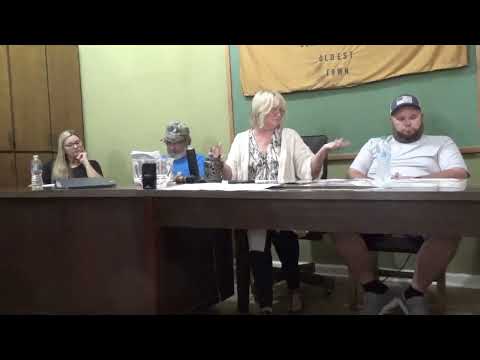
At special June meetings at Liberty Town Hall the council approved a 0.093 tax rate and PEP insurance, voted to hire John Pool as the 2026 auditor, and released town recorder Natasha Wagner after a contested vote; members also flagged discrepancies in prior minutes and scheduled the budget second reading.
At special meetings in June at Liberty Town Hall, the town council recorded approval of a new municipal tax rate of 0.093, accepted PEP insurance, voted to hire John Pool to conduct the 2026 audit and voted to remove town recorder Natasha Wagner from her duties following an insubordination finding, according to the minutes read into the record.
The clerk read attendance and actions from a series of June special calls, at times noting the body lacked a quorum. The minutes for a June 11 special meeting recorded Kendra Stanford and Howard Reynolds Jr. voting yes while Ryan Dodd, Kevin Molnax and Derek Johnson were recorded as no; that session was declared to have no quorum and no action was taken. At the June 15 special meeting the minutes show acceptance of PEP insurance and approval of a new tax rate of 0.093 “accepted and approved by all councilmen.”
Council members discussed hiring John Pool as the town auditor for 2026; the minutes record a motion by Kevin Molnax to hire Pool, with Derek Johnson recorded as second. The minutes also record that Mayor Martin asked Recorder Natasha Wagner for her resignation, which she refused; the council then voted to release Wagner on grounds of insubordination after a motion and a recorded dissent. The clerk’s entry states a dissenting “no” from Derek Johnson and that at least one member left the meeting before a final tally; the clerk recorded that the majority carried and that “Miss Wagner was released from her duties.”
The release and several votes touched off objections from council members who said the meeting record did not reflect how they voted. One council member told the meeting that two amendments were needed to the minutes, including changing a recorded vote because the member said they had walked out and therefore should be recorded as having voted no. That member said, “I was never asked to vote,” and disputed the minutes. Another member responded in the record, “That’s a lie,” and the discussion referenced an audio recording that a member said would clarify the sequence.
The clerk also brought forward routine finance items: a check to Natasha Wagner had an apparent notation discrepancy (the written amount listed $470.99 while a bottom-line notation read “499¢”); the clerk said the check had been cashed for $470.99 and asked the record be corrected. Council discussed investment of town funds and the clerk said CDs on hold totaled about $465,000 and proposed moving funds into three $100,000 certificates; the clerk recorded a motion to transfer money into three $100,000 CDs and members signaled assent.
On budget scheduling, the clerk said the final reading of the 2026–27 budget was set for July 20 to meet the two-week newspaper notice requirement and suggested moving the second formal vote to Aug. 3; the council agreed and the clerk recorded the motion as carried. The clerk closed by asking whether anyone had signed up for public comment (none had) and the meeting was adjourned.
What happens next: the minutes show the council plans a second reading and final vote on the budget at a later meeting (a final reading was noted for July 20 with the council agreeing to move a subsequent vote to Aug. 3). The minutes show contested entries that council members said should be amended; the transcript records competing claims about who voted and whether members left during votes.