Get Full Government Meeting Transcripts, Videos, & Alerts Forever!
Get email alerts on the Habitability Pilot topic
No spam. Unsubscribe anytime.
Housing staff proposes $300,000 micro-grant and loan pilot to help small landlords make habitability repairs
Summary
Housing staff presented a proposed Measure GS–funded pilot offering grants (up to $5,000) and loans (up to $25,000, with up to $30,000 possible per property) to qualifying small landlords to fund habitability repairs; staff recommends a $300,000 pilot, eligibility limits, a 3% rent increase cap during loan term, and loan forgiveness after compliance.
Housing division staff on July 9 presented a detailed proposal for a micro-grant and micro-loan habitability pilot aimed at helping small landlords bring rent‑controlled and deed‑restricted affordable units into code compliance.
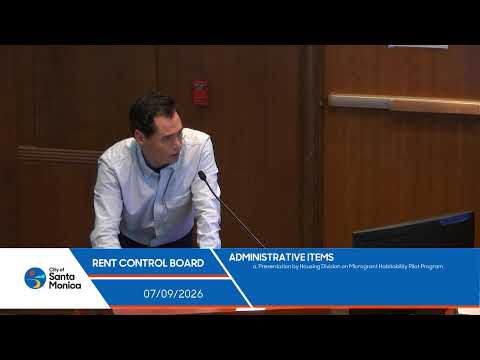
"My name is Richard Diaz. I'm the housing programs administrator for the housing division," Richard Diaz told the Rent Control Board as he opened the presentation and summarized staff research, findings and recommendations. Staff said the proposal responds to rising maintenance and insurance costs and is targeted at small "mom and pop" owners who may lack reserves to cover repairs.
Key elements staff recommended include a six‑month application window (March–August 2027), a $300,000 pilot budget drawn from Measure GS, grants of up to $5,000, loans of up to $25,000 (20 percent of each loan held for contingencies), and the ability for a property to receive both a grant and a loan for up to $30,000 in total. Staff recommended that loan repayment be deferred while landlords comply with terms and that loans be forgiven in years six and seven if landlords meet program conditions.
Eligibility proposed by staff would limit participants to owners who have no more than three properties and no more than 15 total apartments in Santa Monica, who have owned the qualifying property for at least 15 years, and who demonstrate financial need through a means test developed by an outside consultant. Staff said eligible units must serve households at or below 120 percent of area median income (AMI) to align with Measure GS language.
Diaz said the program would require three bids from licensed contractors for covered repairs, city building inspection upon completion, and a property lien if a loan is approved. Disbursement would be phased — with 30 percent upfront once bids and approvals are in place and subsequent payments tied to repair milestones. Staff also outlined data collection and a pilot study to measure applications received, loans and grants dispersed, households served, and compliance monitoring.
On enforcement and program integrity, Diaz said city code enforcement would refer properties that are out of compliance and would confirm repairs after they are completed. He described potential challenges including engaging eligible landlords, providing technical assistance for applications and bid collection, and staffing capacity for loan processing and long‑term compliance monitoring.
Commissioners pressed staff on comparable programs and program design. Diaz identified Philadelphia and Oakland as reference points and noted a similar program in parts of Los Angeles County operated by a nonprofit. Commissioners asked whether the $300,000 budget included consultant costs; Diaz said the full amount was proposed for direct aid and that consultant costs would be covered separately. On rent protections, staff recommended an additional 3 percent cap on rent increases for units receiving loans during the loan term (not exceeding any lower general adjustment) as an incentive for compliance and to protect affordability.
Diaz said staff plan to bring a final proposal to the City Council in the fall and refine outreach strategies (including working with code enforcement and rent control to target eligible properties) before launch. Commissioners also questioned the rationale for tenant income limits; staff said the requirement reflects Measure GS language and aligns pilot benefits with that funding source.
The board did not take a formal vote on the pilot during this meeting; staff emphasized the pilot is a proposal that will be presented to council for approval before launch.