Get Full Government Meeting Transcripts, Videos, & Alerts Forever!
Get email alerts on the Hb44 topic
No spam. Unsubscribe anytime.
Committee advances bill to end twice-yearly clock changes pending federal approval
Summary
The State Planning & Community Affairs committee voted to advance HB 44, Representative Cantrell's bill to move Georgia to permanent daylight saving time pending congressional action; members pressed for more empirical data and stakeholder input before final statewide implementation.
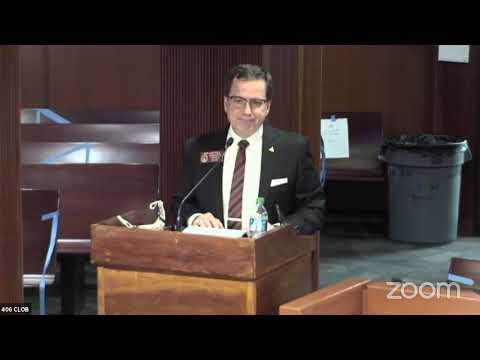
Representative Cantrell presented HB 44 to the State Planning & Community Affairs Committee on Jan. 28, telling members the measure would make daylight saving time permanent in Georgia once Congress grants states authority to change federal observance. The committee voted to report the bill favorably.
Cantrell framed the bill as an effort to eliminate the twice-yearly clock change, saying it harms sleep, public safety and productivity. "The evidence is clear. People despise time change," he said, and cited research—attributed in the hearing to studies he referenced—that he said links the spring clock change to a higher rate of fatal car accidents and an uptick in heart attacks and workplace injuries in the week after clocks move forward. He told members HB 44 would take effect "pending congressional approval," because federal law currently prevents states from adopting permanent daylight saving time unilaterally.
The sponsor repeatedly emphasized constituent support and outreach. He said his informal social-media polling showed strong backing and that groups including the Georgia Farm Bureau and teacher organizations had testified in favor. "If it ever became a concern, certainly, the schools could adjust their bell schedule accordingly," Cantrell told the committee.
Members questioned practical and technical impacts. A member participating by Zoom urged the sponsor to consult the military and warned that some legacy military systems and certain airport operations could be affected if neighboring states chose different observance. That member moved that Cantrell return with empirical data and consultations with stakeholders including the military, utilities, freight carriers and airports; the chair declined to reopen the record but proceeded to take the committee vote.
Representative Kemp asked about fiscal and IT costs; Cantrell said initial system adjustments might be required but expected them to be a one-time, negligible expense. Representative Shannon and others asked about the bill's purpose as a lever for federal action; Cantrell said last year's bipartisan federal efforts would have to be reenacted and that the state measure was intended to be triggered automatically by congressional approval.
After discussion, the committee voted on a motion to report HB 44 favorably. The chair declared "the ayes have it," advancing the bill from committee. Cantrell told members he could supply the committee with the research and source material he relied on if requested.
The bill now moves to the next steps in the legislative process; it will require federal action to take effect as written.