Get Full Government Meeting Transcripts, Videos, & Alerts Forever!
Get email alerts on the State Budget topic
No spam. Unsubscribe anytime.
Lawmakers warn budget squeeze could strip Medicaid funds, threaten services
Summary
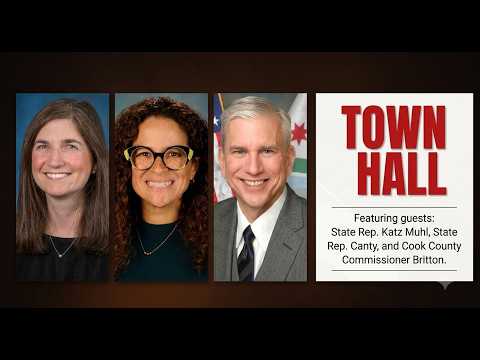
At a Prospect Heights town-hall, Rep. Mary Beth Canty outlined the state budget, said approximately $16.2 billion is mandatory spending and warned that proposed federal changes could cost Illinois roughly $5 billion a year in Medicaid funds over a decade, with downstream effects on hospitals, jobs and vulnerable residents.
Representative Mary Beth Canty framed the state's fiscal picture for the Prospect Heights audience and described the potential human impact of projected Medicaid funding losses.
Canty said the total state budget this year is about "$55,900,000,000" and that roughly "$16,200,000,000" of that covers mandatory obligations. She warned that when federal changes occur — she referenced "HR 1" as a policy example — Illinois could lose significant Medicaid funding. "Over the course of about 10 years Illinois will lose roughly $5,000,000,000 a year or $52,000,000,000 a year over the course of 10 years of Medicaid funds," she said, and she described immediate consequences: people losing access to health care, increased hunger and potential job losses for hospital and health-system workers.
Canty underscored who would be affected: she said about 44% of Medicaid enrollees are children, around 9% are seniors and roughly 7% are adults with disabilities; she also noted about half of Medicaid recipients also receive SNAP. She added that administrative changes to SNAP verification could cost the state about "$80,000,000 a year" in additional administrative overhead.
The representative described these numbers as a lens for policy decisions and said the state must prioritize keeping core services funded while seeking ways to cut unnecessary costs. She urged residents to stay engaged and said lawmakers are considering targeted measures to protect vulnerable populations while managing a tight discretionary budget.
The presentation at the library was informational; no legislative action was taken at the event.