Get Full Government Meeting Transcripts, Videos, & Alerts Forever!
Get email alerts on the Ada Report Acceptance topic
No spam. Unsubscribe anytime.
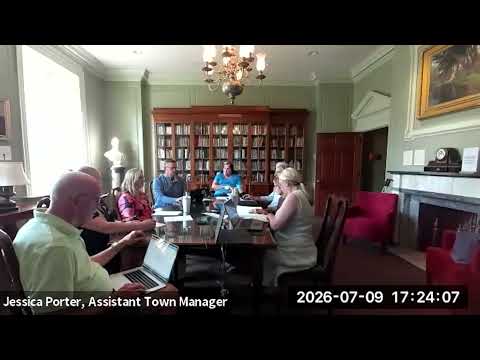
Concord disability commission accepts consultant ADA report, asks for accessibility fixes and clearer priorities
Summary
The Town of Concord Commission on Disability voted to accept the consultant's ADA self-evaluation and transition plan by voice vote while asking the consultant and staff to correct accessibility-layer problems in the document and to explain how items were prioritized before broader distribution.
The Town of Concord Commission on Disability voted to accept a consultant's ADA self-evaluation and transition plan while asking the consultant and town staff to fix accessibility problems in the published documents and to clarify how priorities were determined.
Chair (Speaker 4) moved the meeting toward a vote after commissioners agreed the report's content could be accepted even as they reserved judgment on the consultant's ordering of priorities. The motion to accept the report was made from the floor and carried by voice vote; the chair declared, “Report is accepted.” The commission also agreed to send clarifying questions to the consultant (referred to in the transcript as Emmanuel) and to ask him to work with the commission's accessibility reviewer before wider distribution.
Why it matters: The commission's acceptance allows the Town of Concord to present the consultant's findings to the select board, but commissioners emphasized that publication without accessible markup and a clear framing of priorities could diminish the report's usefulness for budgeting and public outreach.
What commissioners said: An accessibility specialist on the commission described the documents' technical problems and said the content itself does not need changes, only the accessibility layer. The specialist stated, “I can tell you with 1000% certainty that these documents can be fully accessible,” and offered to help coordinate fixes with the consultant rather than authoring hundreds of alternative-text entries himself.
Commissioners pressed for clarity about how priorities were set. One member noted the report could be used to justify capital requests and suggested the commission identify a short list of immediate priorities to present to the select board, including lower-cost items that could be completed quickly. Members discussed using the report to support a —tier 2' capital request in the $250,000'$300,000 range but stressed that any dollar figures must be refined before formal requests.
Next steps and constraints: The commission agreed to 1) send written questions to the consultant seeking an explanation of the prioritization framework, 2) ask the consultant to coordinate with the commission's accessibility reviewer to correct PDF tag trees and missing alternative text before public distribution, and 3) prepare a prioritized list of recommended projects for the select board briefing scheduled for July 20. The chair also proposed allowing the commission to affirm the corrected materials asynchronously if they are returned in time.
What the record shows: The transcript records a motion, a voice vote in favor and the chair's declaration that the report was accepted; it also shows commissioners repeatedly emphasizing that acceptance of the content is not the same as endorsement of the consultant's prioritization decisions.
The commission will revisit priorities and accessibility fixes at its next meeting and expects the consultant to respond to written questions before the select board presentation.