Get Full Government Meeting Transcripts, Videos, & Alerts Forever!
Get email alerts on the Transportation Utv Golfcart topic
No spam. Unsubscribe anytime.
York council delays final vote on UTV and golf-cart ordinances after extended debate
Summary
At second reading, York councilors and residents debated whether to permit utility-terrain vehicles and golf carts on city streets. Supporters cited convenience for farmers and seniors; opponents warned of safety and enforcement challenges. The council will resume the issue at third reading.
At its June 18 meeting, the York City Council held second readings of two ordinances (24-36 and 24-37) that would allow utility-terrain vehicles (UTVs) and golf carts on city streets under rules tied to state statute. The ordinance committee described targeted revisions to limit where such vehicles may operate and to align speed thresholds with state law.
The committee’s presenter said the council could add street-specific restrictions while it cannot override state rules on licensing and farm permits. “Where the statute has defined the requirement, the specific requirement that we don't have authority to impose a different requirement,” a committee member said, noting the city can add local restrictions where statute is silent.
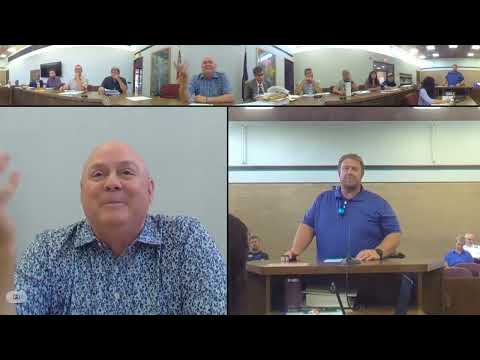
Public comment split the room. John Peel of 515 East 18 urged clarity and predictable rules for users: “We are not here to create issues. We just wanna be able to use them and enjoy them,” he said, arguing owners want clear guidance. A different resident who identified as a farmer told the council that allowing UTVs and golf carts would “make life a 100 times easier” for agricultural users.
Conversely, Dan Aldi, a resident who spoke during public comment, said safety concerns remain: “I still oppose this because of safety,” he said, citing frequent local driving and worry about interactions between slower vehicles and traffic.
Council members debated possible local requirements such as registration stickers and parental accountability for underage operation. Staff and some councilors cautioned that certain controls — for example, how long a motorist has to produce insurance — are set by state statute and cannot be made stricter locally. One councilor summarized the tension: without enforceable local registration and regular inspections, early adoption could create enforcement burdens for police.
After extended discussion and public testimony, the council did not adopt the ordinances on second reading. The mayor announced the issue will return for third reading at the council’s next meeting so members can consider additional input and possible text adjustments.
The council’s next step is the third reading of ordinances 24-36 and 24-37, when members may vote to adopt, amend or delay further.