Get Full Government Meeting Transcripts, Videos, & Alerts Forever!
Get email alerts on the Municipal Bond topic
No spam. Unsubscribe anytime.
Maplewood proposes $10.6 million bond to renovate City Hall and police facilities
Summary
City Manager Amber Withacombe outlined Proposition M, a proposed $10.6 million bond to renovate Maplewood City Hall and add on-site police processing and evidence storage; officials said the measure would raise only the debt service portion of the property tax and projected construction to start in fall 2026.
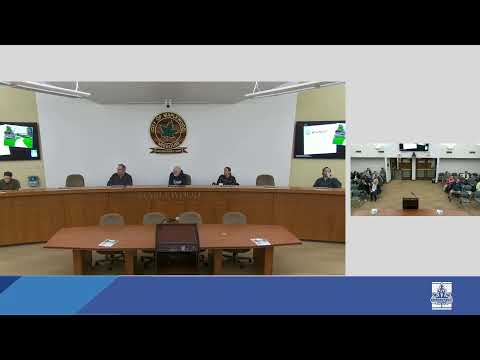
City Manager Amber Withacombe on Monday presented Proposition M, a ballot measure that would finance renovation and expansion of Maplewood City Hall and police facilities, and walked residents through projected tax impacts, operational benefits and a tentative 2026–2028 timeline. “Proposition M, if approved, will not include any operational increases,” Withacombe said, adding the proposal is intended to modernize the 1962 building and bring off-site police operations back in-house.
The bond would fund ADA upgrades, upgraded building systems, additional community meeting space, on-site secure processing and evidence storage, a training area and covered parking for city vehicles. Withacombe said the city’s 2025 assessed valuation is about $282,000,000 and the city’s legal borrowing capacity is roughly 20% of that amount (about $56,000,000). City staff said they are proposing to borrow 10.6 million dollars to add to the city’s outstanding obligations.
Why it matters: Officials said the existing facilities have been flagged during accreditation reviews and create recurring operational costs and time losses when officers must transport detainees or evidence off-site. Police Chief Matt Neiber, who said Maplewood has been CALEA-accredited since 2014, told attendees that some facility shortcomings have been repeatedly noted in assessments and that on-site processing and secure evidence storage would reduce officer transit time and recurring housing costs. “We’ve been CALEA accredited since 2014,” Neiber said, describing the accreditation cycle and the potential for probation if identified facility standards are not addressed.
Tax and financing details: Staff showed sample county tax bills and explained that the city’s consolidated tax rate comprises four levies: general fund, public safety pension, solid waste and debt service. Withacombe emphasized Prop M would increase only the debt service levy; using the city’s slide example, she said the debt service portion for an owner of a $200,000 home would rise by roughly $100 a year. Finance Director Lexi Miller explained the city currently carries about $8.4 million in outstanding debt; later in the presentation she clarified existing bonds issued in 2015 and 2024 mature in 2035 and 2044, respectively, and that a new Prop M bond issued in 2026 would be projected to be paid off by 2046 under the city’s conservative assumption that assessed value remains steady.
Operational impacts and costs: Presenters said some costs are already borne by the city because evidence is stored off-site and suspects are sometimes housed overnight at county facilities; the city budget currently includes roughly $30,000 for overnight suspect housing, and staff said those costs and officer time in transit are expected to rise. Neiber described how off-site processing can pull multiple officers from Maplewood for a single booking and said a short-term holding capability could reduce those impacts.
Public questions and county role: Residents asked about specific items including why Public Works stores materials in City Hall, whether seniors with a county-administered property tax freeze would see higher bills, and whether the tax-rate comparison should be shown monthly rather than annually. Miller said the senior-property-tax-freeze program is administered by St. Louis County and, to the city’s understanding, approved freezes would not increase because of an increase in the city’s general obligation bond debt, but she urged residents to maintain annual renewals and noted the city’s information came from the county’s guidance.
Process and timeline: Staff said design and engineering work would be funded only if voters approve the bond; they expect bond issuance and design in 2026, construction to begin likely in fall 2026 and project completion in 2028, with a staged approach to avoid disrupting city operations. The presentation and slides were recorded and staff scheduled three public open houses and tours (February 7, March 5 and March 28) for residents to review concepts and ask further questions.
What’s next: The presentation concluded with a public Q&A and tours of City Hall; no council action or vote on Prop M occurred during the meeting. Further public meetings and materials are planned while staff and consultants refine project details if voters approve the measure.