Get Full Government Meeting Transcripts, Videos, & Alerts Forever!
Get email alerts on the Environmental Health topic
No spam. Unsubscribe anytime.
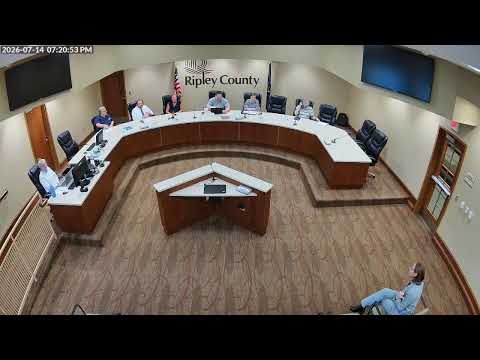
Ripley County resident urges action after neighbor's repeated stays in permitted shed, board considers water testing and state assistance
Summary
A resident reported repeated stays in a permitted shed on a landlocked parcel and alleged foul odors and potential sewage runoff affecting nearby pasture; health staff said proving contamination may require water sampling or state technical support, and the board agreed to research legal options and designate a point person for follow-up.
At the Ripley County Board of Health meeting, resident Stacy Schmaltz described a recurring problem on a neighboring landlocked parcel where a man allegedly occupies a permitted shed for multiple consecutive days and may be discharging human waste into a nearby creek that drains toward her horse pasture.
"My problem is it's a property that we all know is landlocked... a man came there, put a shed, and stays there multiple times during the week," Schmaltz said, adding that neighbors see lights, an air conditioner and cars at the location. She said she filed a complaint March 31 and that an inspector documented a "slight odor of feces" inside the shed during a follow-up visit but that the department later closed the investigation after the owner recorded a deed and paid taxes.
Schmaltz pressed the board for next steps, saying: "I just don't know where to go from here" and asking how the county can enforce against recurring daytime or overnight occupancy without clear proof of sewage in the water. Board members and staff responded that the county lacks a specific housing ordinance addressing multi-day stays in a shed and that a building permit for a shed constrains some enforcement options.
Health Officer (speaker 3) described options used in other counties and urged collecting evidence. "We may need to talk to the state to see...what our options are," he said, recommending coordination with the Indiana Department of Health and the state agencies that can collect definitive samples. "The water sample is probably the best thing," a board member said.
Other suggestions included pursuing an environmental complaint through state authorities (the board mentioned BOAH and IDOH), consulting the Ripley County prosecutor about possible criminal charges for discharge of deleterious substances, or using RV/tank regulations as a precedent for enforcement in similar cases. Staff said obtaining an enforceable order requires evidence that can be supported in court, and that state technical resources may be needed to collect samples and build a case.
The board did not vote on enforcement at the meeting; members agreed to research legal options, seek state guidance on sampling and evidence collection, and a board member offered to serve as the point person to avoid serial-communication quorum problems. The health officer said the matter is not closed and that staff will pursue follow-up with state partners and consider timed water sampling during rain events.
No formal enforcement action was announced at the meeting; the complaint remains under further review and the board identified water sampling and state consultation as the primary next steps.