Get Full Government Meeting Transcripts, Videos, & Alerts Forever!
Get email alerts on the Comprehensive Planning topic
No spam. Unsubscribe anytime.
Consultants pitch community‑driven, fiscally informed comprehensive‑plan updates to Limerick supervisors
Summary
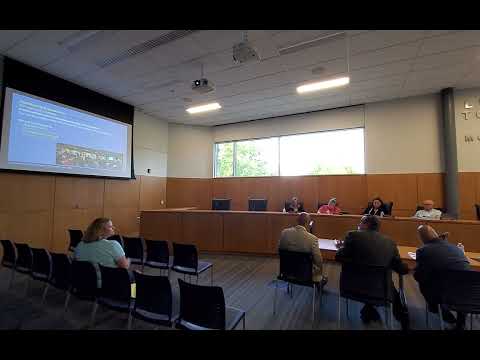
At a Limerick Township Board of Supervisors work session, five planning teams presented proposals to update the township's comprehensive plan, each emphasizing public engagement, housing strategy, fiscal/build‑out analysis and responses to data‑center development; the board took no vote.
Consultants competing for Limerick Township’s comprehensive‑plan update told the Board of Supervisors at a work session that the township needs a plan driven by broad public engagement and grounded fiscal analysis to guide growth, address housing pressures and respond to data‑center development.
Peter Simone, landscape architect with Simone Collins, opened the presentations by stressing local engagement and paired expertise: “We bring that element” of economic and fiscal analysis, he said, explaining the firm’s collaboration with Forward Planning to estimate service demands and projected revenues. Todd Poole of Forward Planning outlined the team’s fiscal approach, saying municipalities often “are in the dark about what happens if it got built out” and that a fiscal/build‑out analysis can show effects on school enrollments, service calls and tax revenue.
Judy Stern Goldstein of Gilmore & Associates said her team read Limerick’s request for proposals as seeking “something much more than a standard comprehensive plan,” and described a bottom‑up engagement approach: kickoff meetings, steering‑committee sessions, pop‑up events at community festivals, targeted stakeholder interviews and an online survey with QR codes and paper options to broaden participation.
Remington Vernecht Engineers emphasized multidisciplinary capacity, GIS mapping and corridor‑level planning, flagging Route 422, Ridge Pike and other arterials as congestion‑management priorities. HRG and Strategic Solutions each highlighted implementable recommendations, with HRG proposing flexible engagement tied to Limerick’s calendar (the tricentennial and community day) and Strategic Solutions stressing actionable checklists and funding strategies to move recommendations into capital planning.
On substance, presenters converged on several priorities the board pressed them to address: how to respond to pending or potential data‑center proposals; how to expand housing choices for an aging population and workforce (accessory dwelling units and smaller‑unit options came up repeatedly); ways to preserve open space while protecting the township’s tax base; and how to align zoning and capital planning with an implementable action plan. Simone’s team proposed about a 14‑month schedule and estimated roughly 1,000 professional hours (about $118 per hour on average), noting that approximately $35,000 of the fee covered Forward Planning’s economic work.
Board members focused questions on community‑forum facilitation, data sources and measurable outcomes from past plans. Presenters said they would avoid jargon, train staff or select facilitators appropriate to the community, and use municipal‑level census data, DVRPC projections and regional GIS/business‑analyst datasets combined with survey and steering‑committee feedback to derive Limerick‑specific recommendations.
No contract decision or vote was taken at the meeting. The Board of Supervisors closed the session after thanking the presenters and staff; the presentations will inform the township’s consultant selection process and next steps in the comprehensive‑plan procurement.