Get Full Government Meeting Transcripts, Videos, & Alerts Forever!
Get email alerts on the Battery Energy Storage topic
No spam. Unsubscribe anytime.
Ticonderoga residents press board over proposed solar and battery-storage projects; town forms research committee
Summary
Residents packed a public hearing to oppose large solar and battery storage projects, raise safety and access concerns, and challenge lease terms; the town created a 14-member Battery Energy Storage Research Committee and set a public study process.
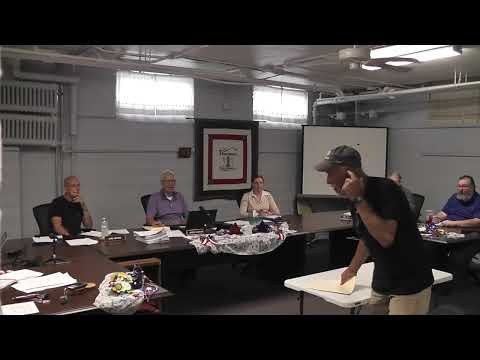
TICONDEROGA — Dozens of residents told the Town Board at a public hearing that proposed solar farms and associated battery-storage facilities threaten safety, property values and recreational access, and that the town has not been sufficiently transparent about developer meetings and lease changes.
“Not once in this lease agreement was Fish and Game Club ever mentioned,” said the club’s vice president, who warned that an amended lease would give the tower company broad control over club property and could remove parking and outdoor recreation space. “We lose everything.”
The hearing, convened by Town Supervisor James O’Brien, brought repeated calls for the town to invite developers to public meetings, hold roundtables and post study materials online. “We want the public to be included,” one resident said, urging the board not to decide the issue behind closed doors.
O’Brien told the room a neutral, multi-disciplinary research team has been formed to examine battery energy storage systems (BESS) and related technologies, focusing on how such systems operate, new technologies, siting considerations and potential public-safety and environmental risks. He said the team will include fire/HAZMAT, electrical, biological and medical experts and that findings will be shared with the public.
“We will look further into this,” O’Brien said. “The research team will be meeting monthly on the third Wednesday at 6 p.m., and information gathered will be shared with the public to keep the process transparent.”
Several speakers raised fire and hazardous-material concerns about lithium-ion battery installations, asked for site tours and pointed to cases where municipalities limited or stopped projects. “If that thing caught on fire, what would you do?” a resident asked, warning of risk to people and wildlife.
Community members also raised questions about how developer pilot payments and tax agreements were handled and whether some projects were fully tax-exempt; the numbers read into the record were inconsistent and prompted requests for clearer accounting from town staff.
The board responded with a mix of assurance and caution: O’Brien said the town will take time to do due diligence, that legal counsel will review lease language and contracts, and that moratorium and zoning reviews are part of the town’s planned work to ensure the board can defend its decisions if legal challenges arise.
Next steps: the town has formally created a Battery Energy Storage Research Committee and scheduled the committee’s first meeting; O’Brien said the committee’s work and supporting materials will be posted on the town website and that the community will decide the future of BESS projects in Ticonderoga after the study is complete.