Get Full Government Meeting Transcripts, Videos, & Alerts Forever!
Get email alerts on the Disaster Recovery topic
No spam. Unsubscribe anytime.
City accepts post‑disaster placard plan, agrees to clarify wording after commissioners press timeline concerns
Summary
The commission accepted the city’s Substantial Damage Administrative Procedures plan, which introduces a placard and mobile permitting workflow to speed post‑disaster demolition and repair permitting; commissioners asked staff to clarify language so placards do not delay emergency cleanup.
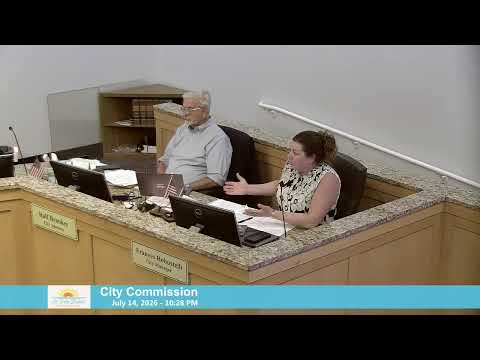
The St. Pete Beach City Commission accepted, with clarifications stated on the record, the city’s Substantial Damage Administrative Procedures plan on July 14. The plan, presented by building official Luke Curtis, lays out a process for rapid initial damage assessments and door‑to‑door substantial‑damage determinations after storms, plus a placard system intended to expedite demolition and follow‑on permitting.
Curtis described a multi‑stage approach: a 24‑ to 48‑hour “windshield” assessment to identify hotspots, followed by more detailed determinations using new software (4Runner) and issuance of an initial demolition‑type permit and corresponding placard posted at affected properties. "This permit at that point evolves from a demolition permit into a hurricane repair permit," Curtis said, explaining how a single tracking number would follow a property through demolition and into repair work.
Vice Mayor Robinson and other commissioners pressed staff on timing and practical realities, drawing on the city’s experience after recent storms. "Residents aren't gonna wait," Robinson said, warning that homeowners often start removing wet drywall immediately on return and that staff must avoid wording that implies people must delay critical cleanup. Curtis and other staff said the intent is not to prevent immediate remediation; staff agreed to revise wording and clarify communications and mobile permitting workflows so property owners can begin emergency cleanup while the placard and permit tracking system are issued.
Staff emphasized coordination with Pinellas County, FDEM and FEMA for damage reporting and said annual updates to the SDAP will follow changes in state law and any future software updates.
The commission voted to accept the document with the clarifications discussed on the record and directed staff to return the plan annually and to refine operational wording and outreach materials so residents understand the placard's purpose and the process to begin repairs.
Next steps: staff will revise the SDAP wording to make clear that the placard expedites permitting and does not prevent necessary emergency demolition; communications staff will prepare outreach guidance for property owners.