Get Full Government Meeting Transcripts, Videos, & Alerts Forever!
Get email alerts on the Budget topic
No spam. Unsubscribe anytime.
New London board hears multi-year budget forecast, approves 2.95% base-wage increases for staff
Summary
After a budget update showing later-year deficits under current assumptions, the New London School District board approved a 2.95% base-wage adjustment for certified, support and administrative staff and discussed options to manage projected deficits.
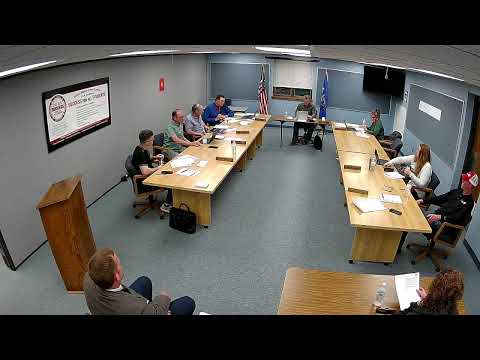
The New London School District Board of Education on April 5 received a multi-year budget forecast and approved a recommended base-wage adjustment that budgets 2.95% for employee groups.
An administrator presented the district’s forecast, explaining assumptions tied to the state revenue-limit formula (current law: $3.25 plus a $25 adjustment in examples used) and limited special-education aid increases. The presentation warned that, under conservative assumptions, later years show budget shortfalls driven by unchanged state aid, continued maintenance-project spending and the presence of a $1.3 million capital referendum item in the long-range forecast.
Board members pressed administration on the timing and severity of projected deficits, with one member noting projections showing large gaps by the 2027–29 timeframe and asking whether the district had managed deficits in the past. The administrator said the district has not operated in a deficit during his tenure and described standard mitigation options: operational adjustments, managed attrition and pursuing additional revenues or referendum choices.
On the personnel side, the board debated how to distribute the 2.95% recommendation. The administration recommended budgeting the 2.95% CPI adjustment as the baseline for certified staff; the compensation committee discussed alternatives (an across-the-board percent vs. a flat-dollar approach for some groups) but ultimately recommended the CPI-based approach. A board member moved to approve the certified-staff increase at 2.95 percent; the motion was seconded and taken by roll call. Subsequent roll calls approved comparable adjustments for support‑staff and administrative groups, though members raised concerns about insurance cost increases and asked that future insurance changes be studied before additional commitments.
Administrators told the board they used conservative revenue assumptions and called the 25-26 year balanced on current inputs while noting the fiscal picture could change with state biennium action or by adjusting local referendum plans. The administration also noted capital decisions (notably bus purchases and stadium work) factor into multi-year projections and identified Fund 46 (capital improvement) as a possible funding source for capital work.
The board referred several follow-up points to staff and committees: continued monitoring of insurance impacts, refinement of wage-distribution mechanics for future consideration and tracking of the state biennium process.