Get Full Government Meeting Transcripts, Videos, & Alerts Forever!
Get email alerts on the Censure topic
No spam. Unsubscribe anytime.
Lewisville council adopts nonbinding censure of Council Member Mac Wilder after March 5 briefing disruption
Summary
After hearing an investigative report and sworn testimony, the Lewisville Town Council voted 5–1 to adopt a nonbinding resolution censuring Council Member Mac Wilder for conduct during the March 5, 2026 council briefing. The resolution admonishes Wilder for breaches of the council's code of ethics but does not affect his pay or office.
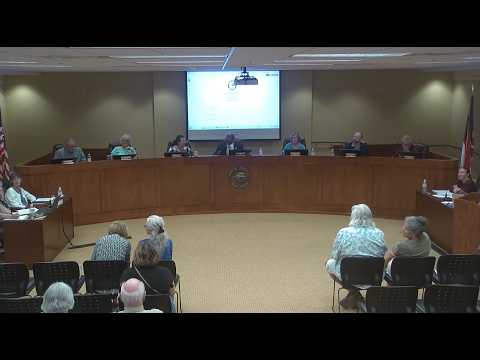
The Lewisville Town Council voted 5–1 on a nonbinding resolution to censure Council Member Mac Wilder for conduct during a March 5, 2026 briefing, the council announced after debate and recorded votes at a special called meeting on May 13, 2026.
Town Attorney Al Andrews, who conducted the investigation and read its findings into the record, described an episode during which Wilder interrupted a staff presentation on a proposed community pool, stood up while holding one or two energy-drink cans, placed a crumpled item on the dais, left the room and later returned to sit in audience seating rather than at the council table. Andrews said witness accounts reflected surprise, discomfort and a heightened tension in the room that evening, and concluded the conduct "was not within decorum" under the Lewisville Town Council code of ethics. Andrews emphasized the report offered findings but did not recommend for or against censure; he also outlined First Amendment limits on disciplinary action.
Why it matters: The censure is a formal, nonbinding admonishment that signals the council's view that a member's behavior fell short of local ethical standards. It does not remove Wilder from office, change his salary or strip committee assignments; instead, it is intended as a public rebuke recorded in the minutes.
Councilmember Fred Franklin moved the resolution, and Councilmember Brady Allen seconded. During debate multiple council members cited specific code provisions on treating colleagues and the public with respect and on decorum in public meetings. Councilmember Brady Allen said the action was about sustaining public trust: "It is incredibly important for the members of this council... for the town of Lewisville, to trust and respect the members of this council," he said. (Brady Allen, Council member.)
Defendant's response: Wilder, who testified under oath, said he left the March 5 meeting to calm down and to avoid escalating the situation. He disputed key characterizations in the report, including that he was yelling, and said he had prepared a shorter, lower-cost project estimate and had engaged residents by door-to-door outreach and informal polling on social media. "I did not call him a Karen," Wilder said when discussing one of the cited online exchanges and later acknowledged using the term but said he did not intend to offend. (Mac Wilder, Council member.)
Investigation summary and evidence: The report, dated May 13, 2026, collected witness interviews and exhibits including meeting screenshots, Facebook-group posts and an email exchange with town staff. It documented that Wilder criticized staff cost estimates for a hypothetical pool project—citing a $12 million figure he believed overstated costs compared with his $6 million estimate—stood abruptly, handled beverage cans and briefly left the meeting. The report also summarized social-media exchanges in which Wilder conducted informal polls and sometimes used collective language such as "we," a usage the report said could reasonably cause confusion about whether he was speaking for council. The attorney noted there was no proof in the record that Wilder deleted posts; some removals appeared to have been done by a group administrator.
Financial and project context: Town Manager Stacy Tolbert and the finance officer testified about process and cost. Tolbert said staff consulted the Local Government Commission and neighboring towns to craft an engineer's-level estimate and explained a bond referendum requires a defined financing plan. Finance testimony put revenue at roughly $267,000 for each penny on the town's tax rate; staff's $12 million hypothetical would imply a roughly 44-cent tax increase, while a $6 million version would translate to about a 22-cent increase, figures used by council members during the discussion.
Council reaction and vote: Several members said they were concerned less about raised voices than about abrupt, physical actions that disrupted the meeting and about the appearance those actions produced. One council member who voted against the motion said the matter raised questions about procedure and context. The clerk recorded the vote as five in favor and one opposed; the council adopted the nonbinding censure.
What the censure does and what happens next: The resolution is an official admonishment to be reflected in the minutes. The town attorney reminded the council that censure is a low form of discipline that cannot, by itself, remove First Amendment protections or restrict a member's right to vote. No follow-up penalties (salary change or removal) were enacted at the meeting. The council closed the matter and adjourned the special session.
The council also discussed—separately from the censure question—whether the town's social media policy should be clarified to require a disclaimer that individual social-media posts represent personal views and not official council positions; that policy discussion was referenced but not resolved at the meeting. The council did not adopt policy changes during the special meeting.
Additional context: The attorney's report and related exhibits were entered into the public record and made available for inspection; several council members and staff who contributed to the report were sworn and testified. The town manager described research into comparable projects and the legal/finance steps required to place a pool bond referendum on a future ballot.
The council adjourned after affirming the censure resolution and briefly offering closing remarks about continuing to work together going forward.