Get Full Government Meeting Transcripts, Videos, & Alerts Forever!
Get email alerts on the Udc Hotel Standards topic
No spam. Unsubscribe anytime.
Pearland council workshop advances draft hotel standards, signals support to prohibit motels
Summary
City staff presented proposed Unified Development Code changes to create hotel subtypes and supplementary standards; councilmembers voiced support for prohibiting motels, debated minimum room-count thresholds for new hotels and asked staff to return with refined draft language and outreach to hoteliers.
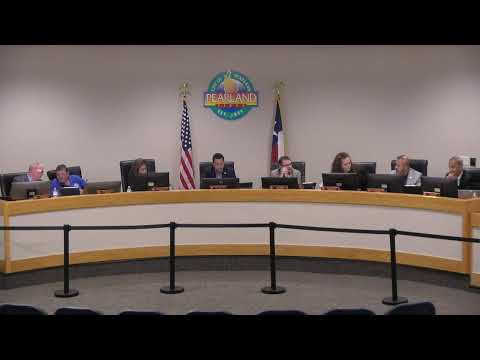
At a Pearland City Council workshop, staff presented proposed updates to the Unified Development Code (UDC) to create hotel and lodging subtypes and set supplementary design and operational standards for new hotels.
The presentation by city staff said Pearland currently has 13 hotels totaling about 1,064 rooms (an average of 82 rooms), with the smallest cited as the Best Western Pearland Inn (45 rooms) and the largest the Hilton Garden Inn (137 rooms). Staff reviewed standards used by other Texas cities — notably Frisco and Grapevine — and proposed a UDC structure that would keep a single overarching hotel definition in Chapter 5 while specifying subtypes and standards in the zoning chapter.
Why it matters: Councilmembers said raising standards for new hotel development could help Pearland attract larger, full-service hotels and support the city’s long-term economic goals, but they also warned against imposing unreasonable costs on existing owners. Several councilmembers expressed concern that forcing upgrades on a change of ownership could restrict property sales or create unintended market effects.
What staff proposed and what council discussed: Staff outlined draft subtypes — boutique, limited-service, full-service, extended-stay and motel — and a menu of supplementary standards (amenity counts, interior corridors, on-site staffing, minimum conference space and parking formulas). The draft included a proposal that motel standards would apply to motels whether existing, expanding, redeveloping or undergoing a change of ownership, meaning new owners might be required to upgrade before obtaining an occupancy permit.
Council feedback and direction: Councilmembers debated several specific items: whether to prohibit motels (characterized in the draft by exterior room access), appropriate minimum room-count thresholds for different hotel subtypes, and whether boutique hotels should be required to include on-site dining or bar space. Multiple members indicated preliminary support for prohibiting motels in future UDC language and for raising the baseline scale for new, non-boutique hotels — staff sought tentative consensus around larger minimums (discussion referenced 120–125 rooms as a target for full/limited/extended types) but the council did not adopt final numeric thresholds during the workshop.
Operational and enforcement concerns: Councilmembers asked how the city could monitor and enforce qualitative standards (for example, maintaining brand/flag standards for franchise hotels). Staff said regulating a national brand’s franchise standards would be difficult and recommended relying on zoning standards, supplementary design requirements and existing code-enforcement tools. Tracy Breuerbach, executive director of Visit Pearland, confirmed Visit Pearland administers the hotel-occupancy tax fund collected from the 13 properties and said the city has had occasional difficulty collecting remittances but has recovered past-due amounts through finance and legal channels.
Next steps: Staff will take the council’s feedback back to consultants to refine draft UDC language (including the change-of-ownership trigger question, room-count thresholds, boutique amenity sizing, and zoning districts where particular hotel types could be allowed by right). No formal ordinances or votes were taken at the workshop; staff framed the session as a feedback-oriented step in the UDC update process.
Representative quotes: "Pearland currently has 13 hotels" — staff presentation. "If you continue to build these smaller hotels, you will never be able to financially self-sufficiently support a full service hotel" — Councilman Patel. "Adult hotel is actually a state definition related to hourly room rates, and that's something that's not allowed" — staff summary of existing code language.
Ending: The workshop ended with staff instructed to refine draft language and perform outreach to stakeholders, including hoteliers, before returning with revised UDC text for further council consideration.