Get Full Government Meeting Transcripts, Videos, & Alerts Forever!
Get email alerts on the Municipal Budget topic
No spam. Unsubscribe anytime.
Pearland council reviews FY27 non‑property tax funds, proposes reserve cuts and vehicle purchases
Summary
City staff proposed FY27 changes to non‑property tax funds including lowering the risk management fund minimum from $1,000,000 to $100,000, capping motor pool lease fees at $2.5 million (general fund) and $500,000 (enterprise), and a $4.5 million capital outlay to replace roughly 43 vehicles; council asked for follow‑up detail on exposure, amortization accounting and fleet lists.
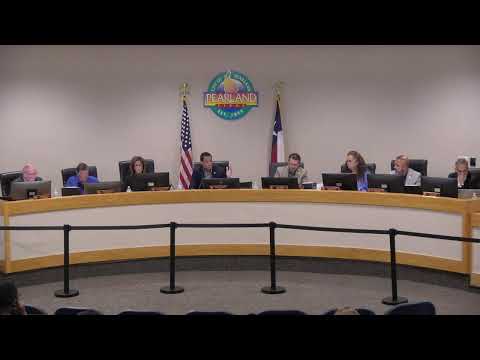
City of Pearland staff presented the first FY27 budget workshop on special revenue and internal service funds, proposing changes to reserve policies and a multi‑year approach to replacing municipal fleet vehicles.
Rachel Winslow, head of Office Management and Budget, told the council staff had completed a risk‑based analysis that supports a 90‑day general fund minimum and recommended reducing some redundant reserves. “Previously this [risk management] fund maintained a recommended policy minimum of $1,000,000,” Winslow said. “Going forward, a minimum fund balance of $100,000 will be maintained in the fund.”
The changes are intended to free short‑term resources for the general fund while policy changes would be returned to council in September. Winslow said the health claims fund will be drawn down without a set reserve amount and that redundant reserves in internal service funds were reduced to avoid duplication with general fund policy coverage.
Staff also outlined a motor pool strategy that would cap lease fees at $2,500,000 from the general fund and $500,000 from enterprise for FY27, and draw down capital holding fund balances to support vehicle purchases. “Beginning in fiscal year 27, we recommend that lease fee payments be capped at $2,500,000 from the general fund and $500,000 from the enterprise fund,” Winslow said. The motor pool capital outlay for FY27 is $4.5 million to replace approximately 43 municipal fleet vehicles, including one ambulance with an estimated cost of roughly $860,000.
Council members pressed staff on fiscal exposure and long‑term sustainability. Mayor Pro Tem Shavria asked what the city’s exposure would be if unexpected claims exceed the reduced risk fund; Winslow said liabilities would be handled through the general fund and enterprise fund if necessary. Councilman Colson asked whether $3,000,000 per year into the motor pool is sustainable; staff said $3,000,000 is likely sustainable for general and enterprise fund needs except for heavy apparatus such as fire trucks, which require separate planning.
Accounting questions emerged about noncash amortization entries. Councilman Patel noted a $2,800,000 amortization expense for multi‑year software subscriptions and asked whether it depressed reported fund balances. Winslow agreed to follow up with auditors to clarify how the amortization is recorded and its effect on year‑end balances.
Staff described IT funding proposals that include $400,000 for continued hardware replacement and said two positions were reclassified into the IT fund. Council members asked for a five‑year IT recapitalization plan to show whether the city’s $20–25 million estimate for full IT recapitalization would be met.
Winslow summarized special revenue fund highlights: $200,000 in the municipal channel (PEG) fund for council chamber technology, CDBG funding for two grant‑funded community development positions and a $2,000,000 federal grant earmarked for a fire truck purchase, a $1.5 million transfer from the park development fund for the Hickory Slough Playground, and a $600,000 placeholder in the hotel/motel fund for potential sports tourism projects.
Council members requested more detail on several line items. Councilman Patel asked staff to provide the supporting breakdown for the large “miscellaneous” amounts and to show footnotes in the next workshop. Multiple council members asked staff to provide spreadsheets listing vehicle replacements, ages and mileage, as well as a clearer bulleted summary showing how the proposed moves toward reduced reserves support the city’s no‑new‑revenue strategy.
Staff said they will provide a follow‑up memo with requested details within one to two weeks and return to council in subsequent budget workshops on July 27 and August 10 as part of the formal adoption schedule.