Get Full Government Meeting Transcripts, Videos, & Alerts Forever!
Get email alerts on the ADU Policy topic
No spam. Unsubscribe anytime.
Board notes state ADU change could ease conversions; members flag septic and site constraints
Summary
A board member reported that House Bill 1079 from Concord loosens where accessory dwelling units (ADUs) can be located by allowing conversions of existing structures; Brookfield officials said septic, lot capacity and local rules still limit how many ADUs can be added.
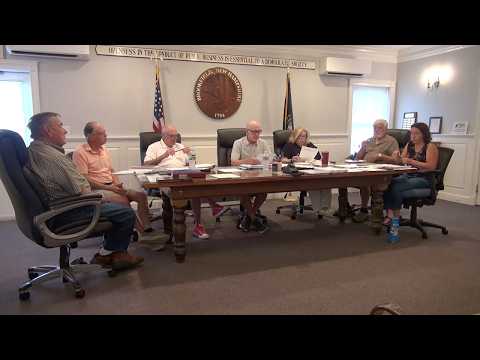
During regular business on July 13, a planning board member reported a change at the state level affecting accessory dwelling units (ADUs) and the board discussed what, if any, local follow‑up is needed.
A committee member told the board that House Bill 1079 was signed in Concord and "would allow ADUs to be, put in a detached garage, a barn, even though that garage or barn may not have met setback or a lot coverage rules, as long as they were in existence before 07/01/2025." The speaker said the change is intended to make conversion of existing structures into ADUs simpler.
Board members cautioned that state law does not remove site or infrastructure constraints. One member observed that septic capacity, lot size and state septic permitting remain limiting factors and that the law does not change local requirements for septic or site suitability. Another member asked whether the 900‑square‑foot ADU limit still applies; the transcript records a reply that the square‑foot cap "didn't change." Participants agreed to review local zoning language and billing/permit processes in light of the state change.
The board noted practical constraints that frequently determine whether an ADU is feasible: septic permitting, lot layout, current use designations and local overlay rules. Members suggested reviewing the town's zoning and permit guidance to identify clarifications or potential conflicts with the state change, and to consider whether any local amendments are needed to align with the new law while maintaining site and public‑health safeguards.
Next steps recorded by the board included monitoring implementation of the state change, answering constituent questions about ADU eligibility and the permitting process, and reviewing local zoning definitions and septic requirements at a future meeting. No local regulatory changes were adopted at this session.