Get Full Government Meeting Transcripts, Videos, & Alerts Forever!
Get email alerts on the Homeless Services topic
No spam. Unsubscribe anytime.
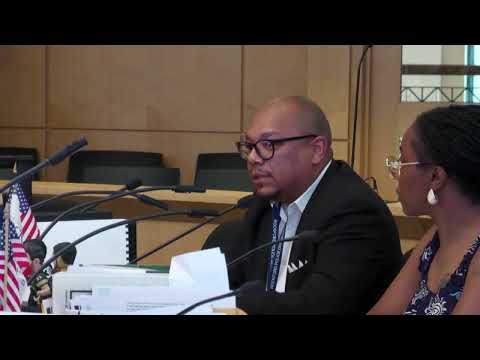
Avivo Village video shown to Rockford commission; staff discuss zoning and code hurdles for warehouse conversions
Summary
The commission viewed a video about Avivo Villages model of 100 individual homes with integrated supports; David Jeffries, program director, introduced the approach and Rockford zoning staff said building codes and use classification (homeless shelter vs. affordable housing) determine whether a converted warehouse could host a similar model.
David Jeffries, program director at Avivo Village, introduced a short video describing the program's model of individualized homes and wraparound supports for people exiting homelessness.
"This isn't a traditional shelter. So we are open 24 7. We have a 100 homes, individual homes here for people to live in, and you can bring your pets if you have them," Jeffries said in the presentation. The video emphasized a person-centered approach with staff and resident roles (for example, a resident barber) and described services ranging from help obtaining identification to connections to medical and mental-health care and benefits enrollment.
Commissioners asked whether a similar model could be created by converting an empty warehouse into many small apartments. Scott Capavella responded that such a conversion would be primarily governed by building-code compliance and underlying zoning. "If it's truly a homeless shelter, we would have to call it a homeless shelter and it would have to probably go through the zoning process," Capavella said, explaining that the ordinance lists 'homeless shelter' as a use that requires a special-use permit in commercial districts and is not listed in some other districts.
Capavella said if a proposed project were instead structured and permitted as affordable housing and it met building codes and the appropriate use categories, the city would consider it; however, he cautioned that separate water and sewer connections for each unit and other infrastructure requirements can add substantial costs.
The commission agreed to further discuss models and regulatory pathways; no formal action was taken.