Get Full Government Meeting Transcripts, Videos, & Alerts Forever!
Get email alerts on the Zoning Infill topic
No spam. Unsubscribe anytime.
Rockford planning staff propose zoning text amendments to spur infill and allow more multifamily
Summary
Planning and zoning manager Scott Capavella outlined proposed text amendments that would encourage infill development in Rockford by allowing new 2-family construction in single-family areas under an overlay, permitting 3-4 unit new construction on some R2 vacant lots, reducing certain setbacks and changing parking requirements; the items are scheduled for the July 21 agenda and will go to council after legal review.
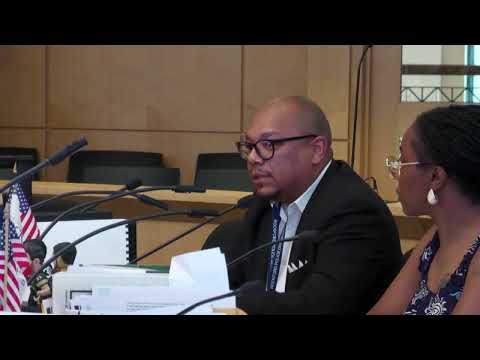
Scott Capavella, planning and zoning manager for the City of Rockford, told the commission the proposed package of text amendments is aimed at "protect[ing] and promot[ing] the public health, safety, and general welfare" while creating opportunities for new housing in older neighborhoods.
Capavella said the package would create an infill overlay district allowing new two-family (two-flat) construction by right within R1 single-family neighborhoods in targeted areas. "It doesn't mean that you have to build a 2 family. I mean, you could build single family as well," he said, adding the allowance would apply to new construction only and would not permit converting an existing single-family house into a two-family unit.
The manager also proposed allowing 3- and 4-unit new construction on vacant R2 lots that meet minimum lot-size standards to improve financial feasibility for builders. "Maybe they could do a 3-plex here, and the bank won't need to jump in," Capavella said, arguing the change would help close financing gaps and bring new construction into older areas.
Other changes Capavella described include reducing rear-yard setbacks (from 30 feet to 20 feet in some places), reintroducing multifamily as a permitted use in the C1 limited-office district, and raising thresholds that trigger special-review processes: single-family subdivision caps would move from 100 to 150 lots, townhome caps from 50 to 60 units, and multifamily by-right thresholds from 60 to 80 units.
On parking, the amendments would relax the requirement that every unit have an enclosed garage; under the draft, new single-family detached homes would need two parking spaces (not necessarily enclosed) and new two-flats would require about 1.5 spaces per unit, enabling alley or surface parking rather than mandatory garages.
Capavella emphasized the city already uses incentives to spur building. He described a program that waives building fees and water hookup fees and provides a three-year tax abatement from the city and the Rockford school district; he said that combination returns portions of taxes to buyers over three years and estimated builders and buyers could save "probably $2,025,000" in reduced fees on some projects, noting the city did not provide a line-item breakdown during the presentation.
Capavella said the text amendments and an infill overlay are on the commission agenda for July 21 and, if reviewed by legal, could be before the city council by the first Monday in August. The draft's stated intent is to promote new construction while preserving the option for single-family builds and to reduce barriers that have discouraged developers in the past.
The commission asked clarifying questions during the presentation about how the rules would apply (for example, whether conversions would be allowed) and about neighborhood impacts; Capavella reiterated that many changes apply only to new construction and that minimum standards and setbacks would still apply.
The presentation closed with staff noting the city will continue standard public-notice practices for any rezoning or special-use proceedings (published agendas, adjacent-owner letters and on-site signs) and that additional details and final language will be reviewed by the legal department before coming to council.