Get Full Government Meeting Transcripts, Videos, & Alerts Forever!
Get email alerts on the Education Ai Policy topic
No spam. Unsubscribe anytime.
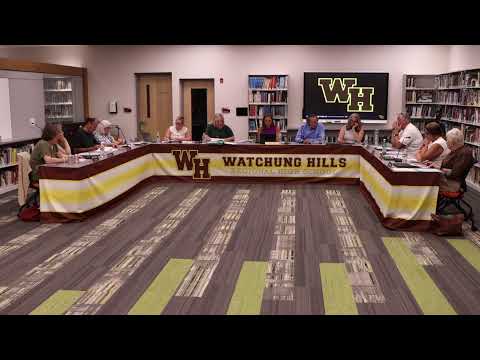
Watchung Hills board approves new generative-AI policy after hour-long debate
Summary
After lengthy debate about detection, fairness and student due process, the Watchung Hills Regional High School District board voted on July 14 to approve policy P2365 governing acceptable use of generative artificial intelligence; members disagreed on how enforcement should work and whether teachers should act as primary adjudicators.
The Watchung Hills Regional High School District Board of Education spent much of its July 14 meeting debating a proposed acceptable-use policy for generative artificial intelligence before moving to a roll-call vote on policy P2365.
The board’s superintendent, Dr. Jewett, told members the district has been preparing staff and students for AI use and emphasized education and due process when misuse is suspected. “Don’t believe everything AI spits out at you. I mean, AI hallucinates,” Dr. Jewett said, describing classroom practices for investigating suspected misuse, including reviewing sources, revision histories and meeting with students rather than relying solely on automatic detectors.
Several members raised technical and fairness concerns. One board member argued for a strict line between school and home use — “AI out of school, no AI in school” — saying such an approach removes the need to adjudicate complex cases in the classroom. Other members countered that strict bans risk penalizing students who have improved their writing or used tools appropriately and that teachers should not be placed in a position of making unilateral judgments.
The policy debate touched on practical safeguards. Dr. Jewett described the district’s present practice for suspected academic dishonesty as using software benchmarks only as an initial indicator: teachers investigate, consult supervisors and follow the student-discipline procedures already in the handbook, she said. “If they determine that, okay. It is authentic…that is all outlined,” she said.
Board members also discussed the limitations of detection tools and the need to teach students media literacy and ethical citation practices so that AI can be used responsibly. Several speakers urged separating prohibitions on personally identifiable information and unsafe image use from broader guidance about when and how students may use generative tools in assignments.
The board took a roll-call vote on P2365 following discussion. Recorded comments and questions during the debate reflected a split in views about enforcement and detection, with supporters emphasizing guidance and instruction and critics warning of unfair punishment or impractical enforcement.
After the P2365 vote, the board moved on to other agenda items and ultimately adjourned following a second public-comment period.
The policy language as discussed incorporates teacher-student investigative steps and references existing student-discipline procedures; the transcript records the debate and the roll-call, and administrators said further staff training and student instruction would follow implementation.