Get Full Government Meeting Transcripts, Videos, & Alerts Forever!
Get email alerts on the Financial Inclusion topic
No spam. Unsubscribe anytime.
Federal Reserve official urges calibrated AI oversight to expand financial inclusion
Summary
A Federal Reserve official said responsible bank innovation, including careful use of AI, can broaden access to credit and financial services for underserved Americans, and highlighted a recent Financial Stability Board report open for public comment through July 22.
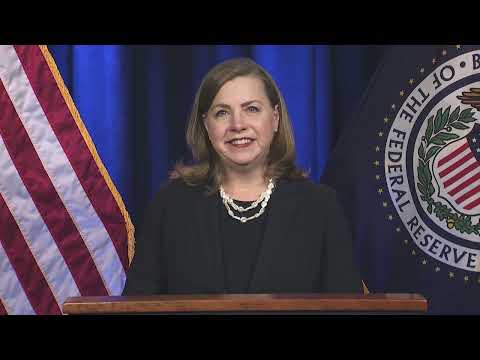
A Federal Reserve official speaking at the 3rd annual financial inclusion conference urged regulators and banks to support ‘‘responsible innovation’’ in banking while calibrating oversight to the risks posed by different artificial intelligence applications.
The official said banks are ‘‘at the center of financial inclusion efforts’’ and that ‘‘one of the most powerful tools banks have to expand access and build a more inclusive financial system is through innovation.’’ He added that when banks ‘‘innovate responsibly, they can build a faster and more efficient banking and payment system, lower costs, expand product availability to underserved consumers and businesses, and promote market competition.’’
Why it matters: The speech framed AI as a double-edged opportunity for inclusion. The official argued AI could help expand availability of credit and reach low- and moderate-income consumers but warned that AI-driven credit decisions raise heightened legal and compliance challenges that require clearer supervisory expectations.
The official said the Federal Reserve can ‘‘create a supportive regulatory environment by being receptive to new ideas and technologies’’ and provide clarity on expectations, but should not ‘‘micromanage individual business decisions’’ made by banks and their management. ‘‘Ultimately, the decision of when and how to innovate rests with each bank and its management,’’ the official said.
On AI specifically, the speaker called for a risk-based approach: lower-risk uses of AI should receive an ‘‘appropriately calibrated supervisory and regulatory touch,’’ while higher-risk applications—especially those that materially affect individual credit decisions—may require more rigorous oversight. ‘‘So our goal must be to support responsible AI innovation,’’ he said.
The official also emphasized the need to account for institutional differences: ‘‘We recognize that smaller banks may not have access to the same resources as their larger peers, but still need to innovate,’’ he said, urging supervisory guidance that preserves flexibility so smaller institutions can implement AI consistent with their structure, business, and culture.
He recommended leveraging existing risk-management frameworks and adding tailored enhancements and controls ‘‘appropriate to the specific risks that each AI application presents.’’
International coordination: The official noted work at the Financial Stability Board (FSB), saying, ‘‘I have prioritized work on AI as the chair of the Financial Stability Board’s standing committee on supervisory and regulatory cooperation.’’ He cited a recent FSB report on ‘‘sound practices for responsible adoption of artificial intelligence’’ and said the report is seeking public comment through July 22.
The remarks closed by restating the link between responsible innovation and inclusion: ‘‘When we provide clear regulatory expectations and focus supervision on material risks, banks can innovate to reach more Americans with affordable financial services,’’ he said. ‘‘When we create unnecessary complexity or prescriptive requirements, we risk limiting the very innovation that can expand access.’’
The official concluded by wishing attendees a productive conference.