Get Full Government Meeting Transcripts, Videos, & Alerts Forever!
Get email alerts on the Land Use Solar topic
No spam. Unsubscribe anytime.
Supporters urge Franklin County to review 185‑MW Prairie Sunlight solar proposal amid moratorium debate
Summary
A Prairie Sunlight representative and local supporters told the Franklin County Commission on Feb. 11 the company's proposed 185‑megawatt, 500‑acre solar project can be reviewed under existing county zoning and would bring major economic benefits; commissioners and residents pressed for a comprehensive plan review and raised concerns about battery storage and the moratorium process.
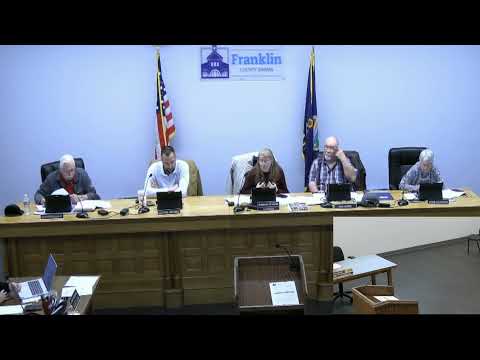
Supporters of the Prairie Sunlight solar proposal told the Franklin County Commission on Feb. 11 that the company's planned 185‑megawatt, 500‑acre project can be evaluated under existing county zoning and urged commissioners not to extend a moratorium that would delay review.
A Prairie Sunlight representative told commissioners the project would occupy about 500 acres, "would use about 500 acres for solar panels," preserve streams and wooded areas, include pollinator‑friendly ground cover and could allow sheep grazing. The representative said project equipment would be removed at the end of the project's life and the land could return to farming.
"Prairie Sunlight is projected to provide more than $230,000,000 local economic value," the representative said, and added that about $153,000,000 would be new property tax revenue for the county and local services. The presenter also cited $50,000,000 for community funding, $12,000,000 to nearby nonparticipating landowners and $45,000,000 to participating landowners as part of the projected economic package.
Tom Weigand, who identified himself and said he previously served as a county commissioner and city commissioner, urged approval on economic grounds and said the location near an industrial park and transportation links made the site appropriate for industrial‑scale solar.
Speakers at the meeting also pressed the commission on process and technical issues. When asked how large the project would be, a participant stated, "It's 185 megawatts," and commissioners and members of the public raised concerns about battery energy storage, saying the county currently has "no regulations on it" and warning that storage containers could alter neighborhood character. Other commenters said a separate moratorium had been adopted quickly and without the same public notice or planning commission review that accompanied an earlier wind moratorium.
The Prairie Sunlight representative said the project has advanced in the regulatory interconnection process, including a signed interconnection agreement, and warned there are substantial interconnection fees and deposits due in the next months that could put the project's position at risk if delays continue. The presenter said environmental and engineering studies (wildlife studies, wetland delineation and engineering reviews) were in final review and public outreach continued.
Supporters asked commissioners to allow the established special‑use permit framework and case‑by‑case public hearings and conditions to address impacts, rather than extend a moratorium. Several commissioners and participants said they want a faster review of the county's comprehensive plan so future projects can be considered in that context.
The meeting record contains public comment and discussion but does not show a formal vote on the Prairie Sunlight proposal or on the moratorium. Commissioners moved on to consent business after public comment; several speakers said they were willing to continue working with county staff.
What happens next: speakers asked the commission to proceed with standard special‑use permitting steps and hearings; the transcript shows continued discussion and no final decision recorded during the Feb. 11 meeting.